
Sahara Loom StudioThe
Story Behind the Weave — a Berber family cooperative in Morocco, andthe wool that carries 2,500 years of knowledgeWritten by Hamza · Sahara Loom Studio · Fes, Morocco
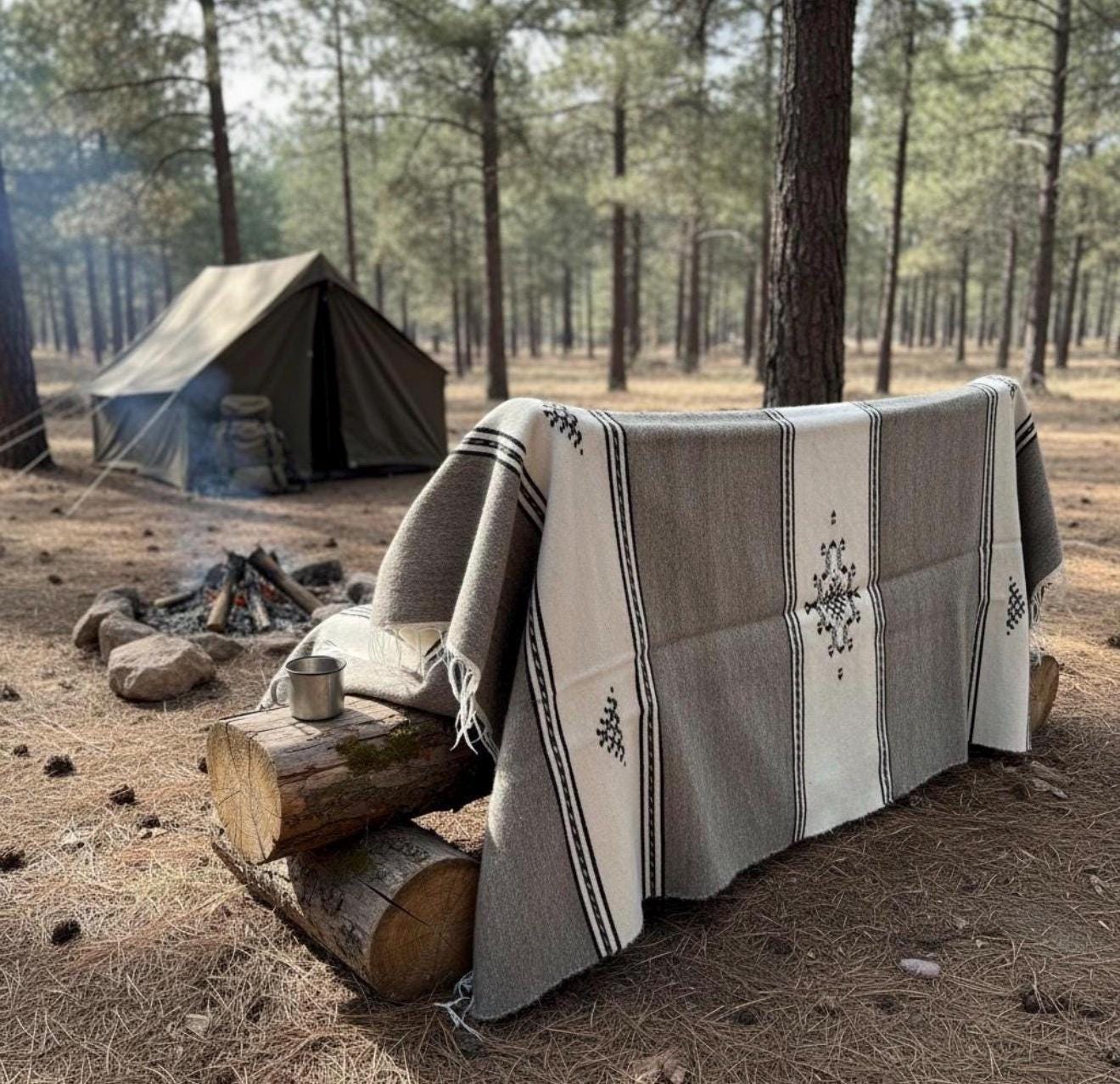
Figure 1. Evening fire in the Moroccan landscape. This is where warmth begins — long before ablanket is ever sold.
· Shop the Collection
1 · Who We Are
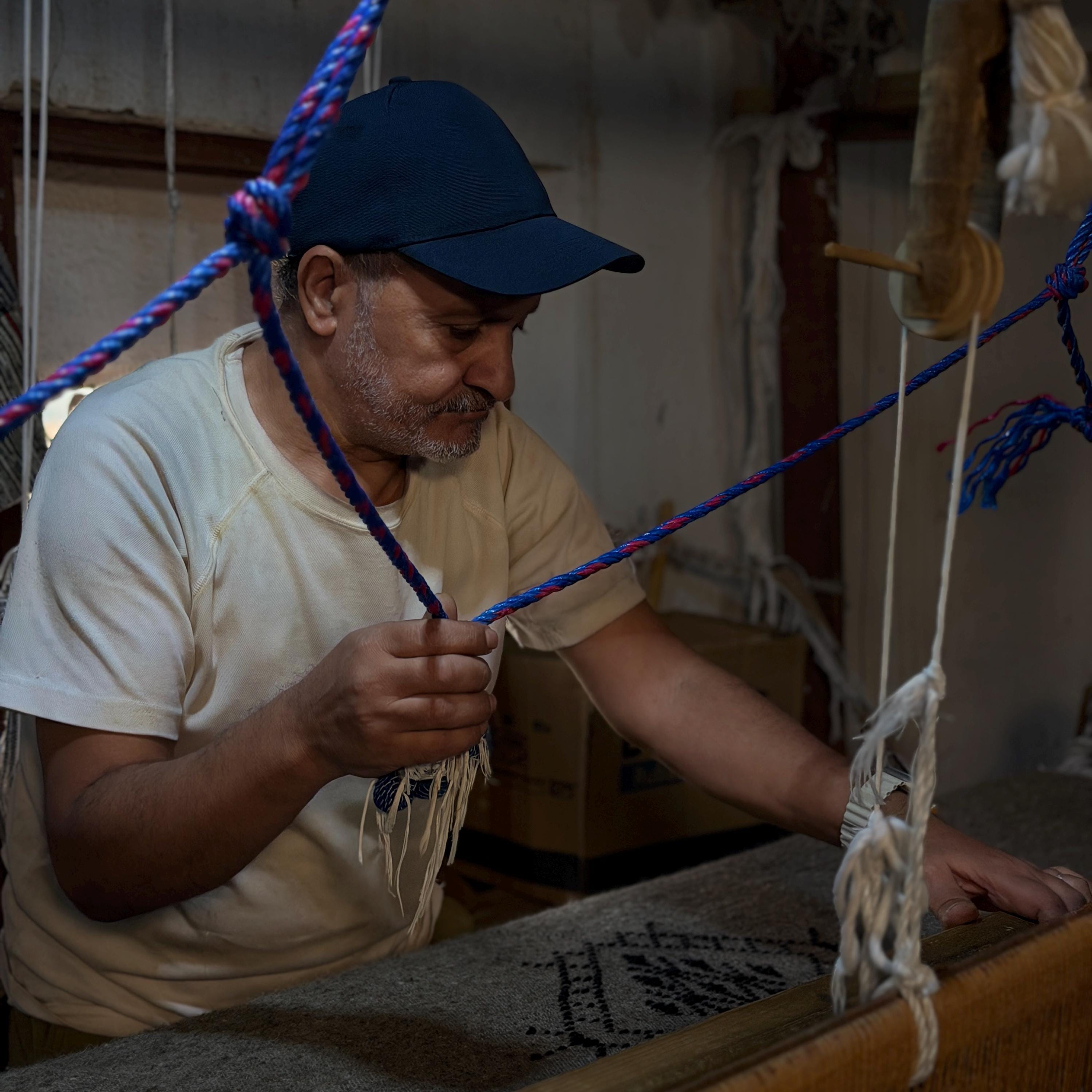
We are a Berber cooperative, and we are a family. Not a workshop that employs a family, and nota factory that lists a family as a supplier — an actual household where every person works andevery person signs their work in some way.My father weaves. He is the master of the loom in these photographs, and if you look closely atthe images in this book you will see the same hands at work in every one of them: checking thetension, setting a motif, pressing the weft down with a wooden mallet, tying the last knot. Mymother and my sister work the finishing, the embroidery and the colours. My brother and myuncle handle the warping and the heavier looms. I moved between the workshop and the outsideworld — the designs, the photography, the customers, the documents, the English, the shipping,the internet.
- Our association is small by design. Each one of us has a hand in the management, the design andthe craft, and each one of us has a touch that is recognisably his or her own. My father's motifs sitdifferently from my uncle's. My sister's embroidery tension is tighter than my mother's. When youbuy a piece from us, you are buying something specific: a particular person's hand on a particularday, working in a particular mood, on a loom that has been re-threaded thousands of times.
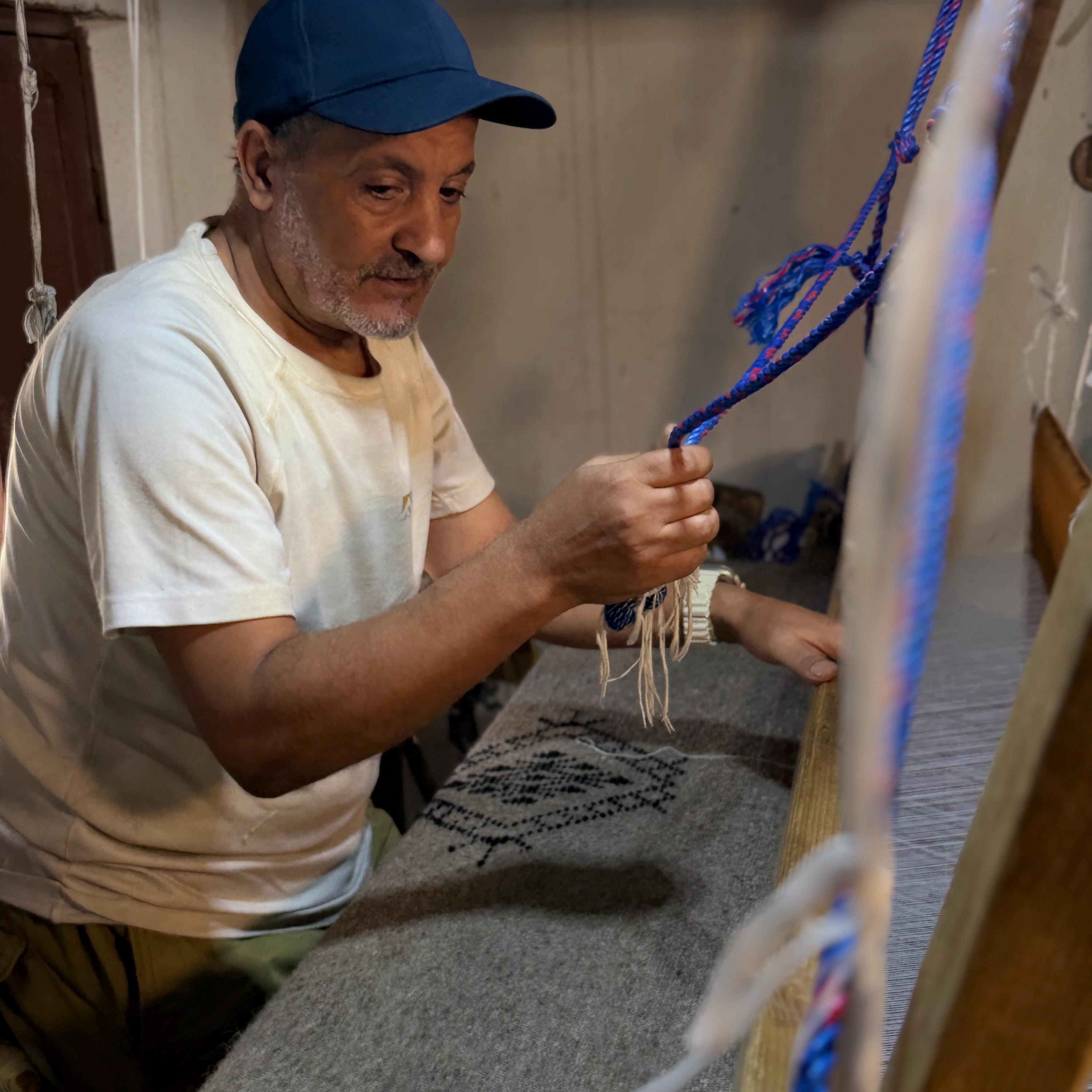
Figure 2. My father at the loom, threading the warp. A traditional Berber loom, worked byhand, one blanket at a time.
What we make
• Blankets — camel hair, sheep wool, blended flatweaves with Berber tattoo motifs.
• Scarves and shawls — the same wool, lighter and finer.
• Djellabas — traditional Moroccan garments, made to measure.
• Rugs and carpets — ladies' weaving, heavier and denser pieces for floors and walls.
• Poufs — filled and unfilled, for sitting, for meditation, for the corner of a room.
• Bags — wool and leather, hand-finished.
• Custom pieces — if you can describe it, we can sit down and discuss whether we can weave it.Every one of those is made from the same starting point: raw fibre, dyed or left undyed, carded,spun, warped, and then worked by hand. No line of production is automated, and none of it canbe rushed.
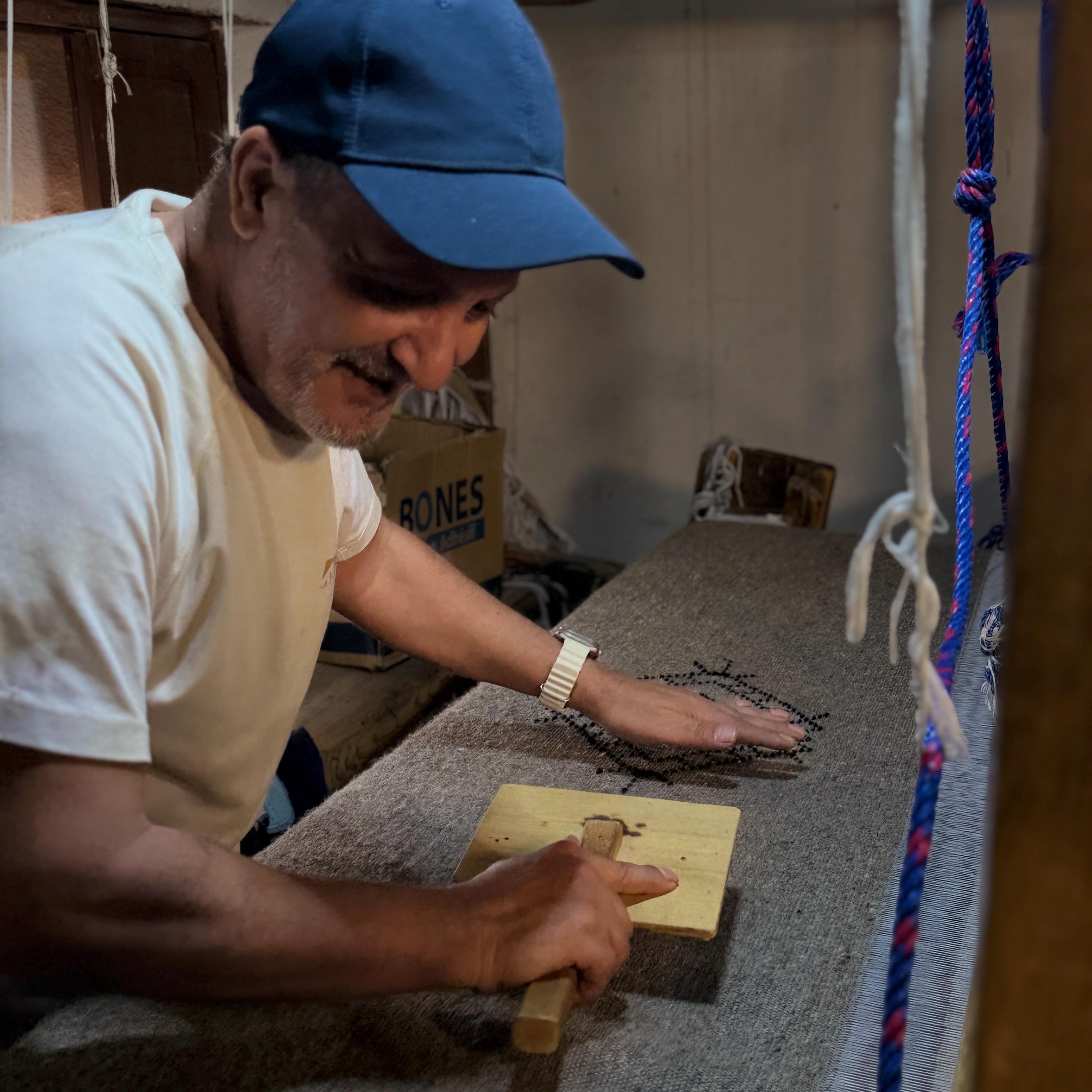
Figure 3. Setting the motif by hand. The pattern does not come from a printed chart — it comes out of memory.
2 · Why We Chose This WorkNobody
in a Berber family chooses weaving the way someone chooses a career.
You grow up nextto a loom. You are handed a shuttle before you are handed a phone.
The sound of the loom is thesound of your childhood, and the smell of raw wool is the smell of home.
But there is a moment when it stops being something you simply grew up with, and becomessomething you decide to carry.
For me that moment came when I understood what was actuallyhappening to this craft.
Handicrafts across Morocco have been fading for decades. Not because they are unwanted, butbecause they are uneconomical for the people who make them.
A young person who watches hisfather work twelve-hour days, for a price that does not support a household, has a very rationalreason to leave and take work in a city.
Piece by piece, family by family, this knowledge isdisappearing. And when a loom goes cold, it does not just stop producing textiles.
It takes thememory of the patterns with it — and the memory lives in the weaver, not in a book.
So we decided to do the opposite
Our answer was not to compete on price. Competing on price is exactly what destroyed the craftin the first place.
Our answer was to bring this work back to life properly — not merely to keep itbreathing, but to make it a good life.
A weaver should be able to support a family with his hands,and should be able to say what he does without apologising for it.
That is the entire reason Sahara Loom Studio exists.
Every blanket sold is a small piece of thatargument, made in public: this craft can pay, it can be beautiful, and it can be sold to someone onthe other side of the world who genuinely understands what they are buying.
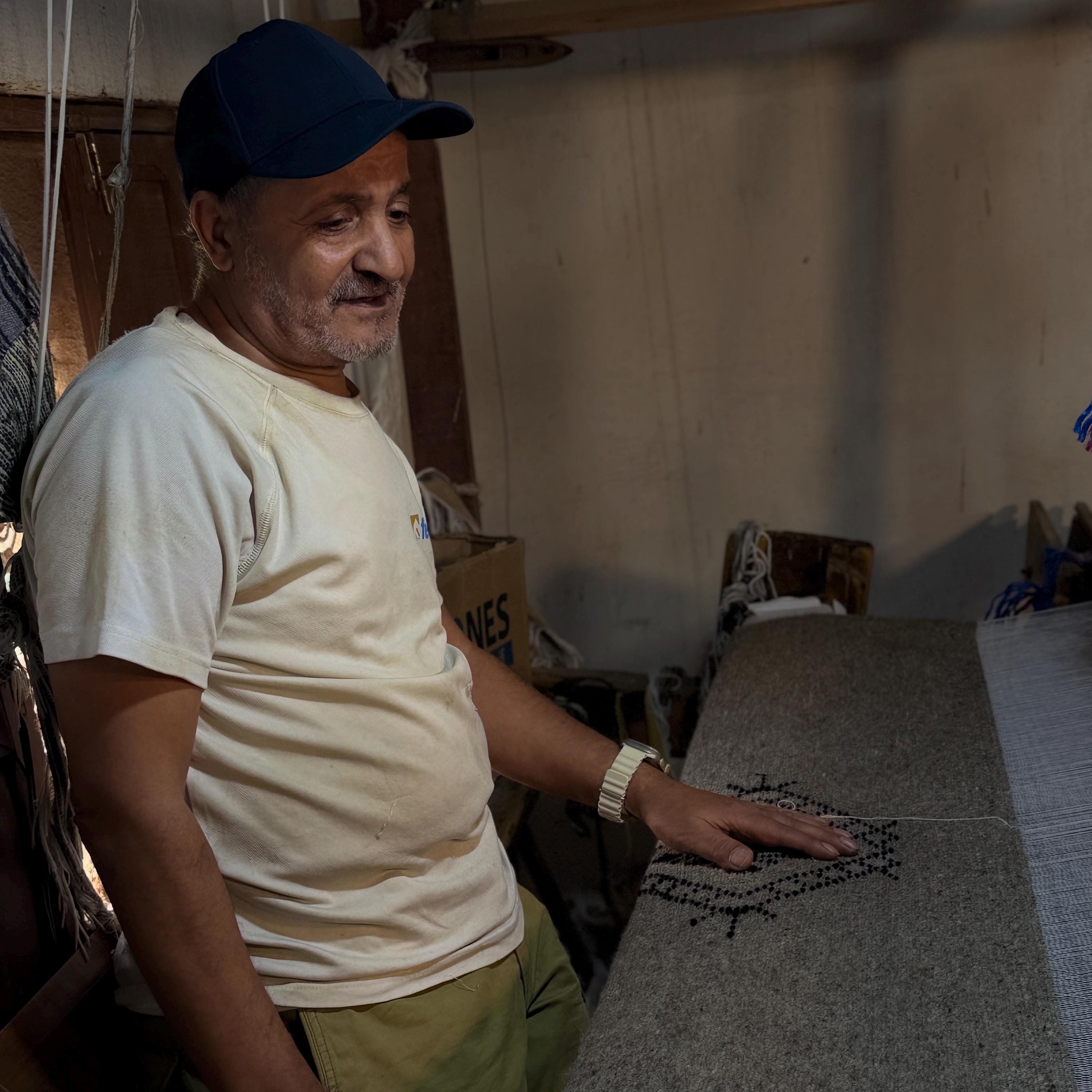
Figure 4. My father, smiling at the piece he is finishing. This is what the work looks like whenit is treated as a profession rather than a survival.
3 · What This Work Really Means to Us
Wool is not a material. It is a relationship
Our region has been a wool country for a very long time. The Berber kingdoms traded wool andwool textiles long before this land had borders in the shape they have today — estimates of thatknowledge stretch back more than two thousand five hundred years. The people who boughtfrom us then were trading with people who understood sheep, climate, altitude and patience.
We are, quite simply, children of wool. It is the material our ancestors slept under, travelled with,prayed on, celebrated on, married under, and were buried in. When I put my hand on a freshlyfinished blanket, that is not decoration I am touching. It is continuity.
What we are protecting is not an object
• The knowledge of how a particular fleece behaves in a particular season.
• The memory of which motifs belong to which families, and why.
• The patience to work a loom for days without losing the pattern in your head.
• The relationship between a weaver and the animals whose fibre he uses.
• The way a household organises itself around a craft, across three generations, withoutresentment.
All of that is what a machine cannot produce, no matter how well it copies the surface. And that isprecisely what is at risk.
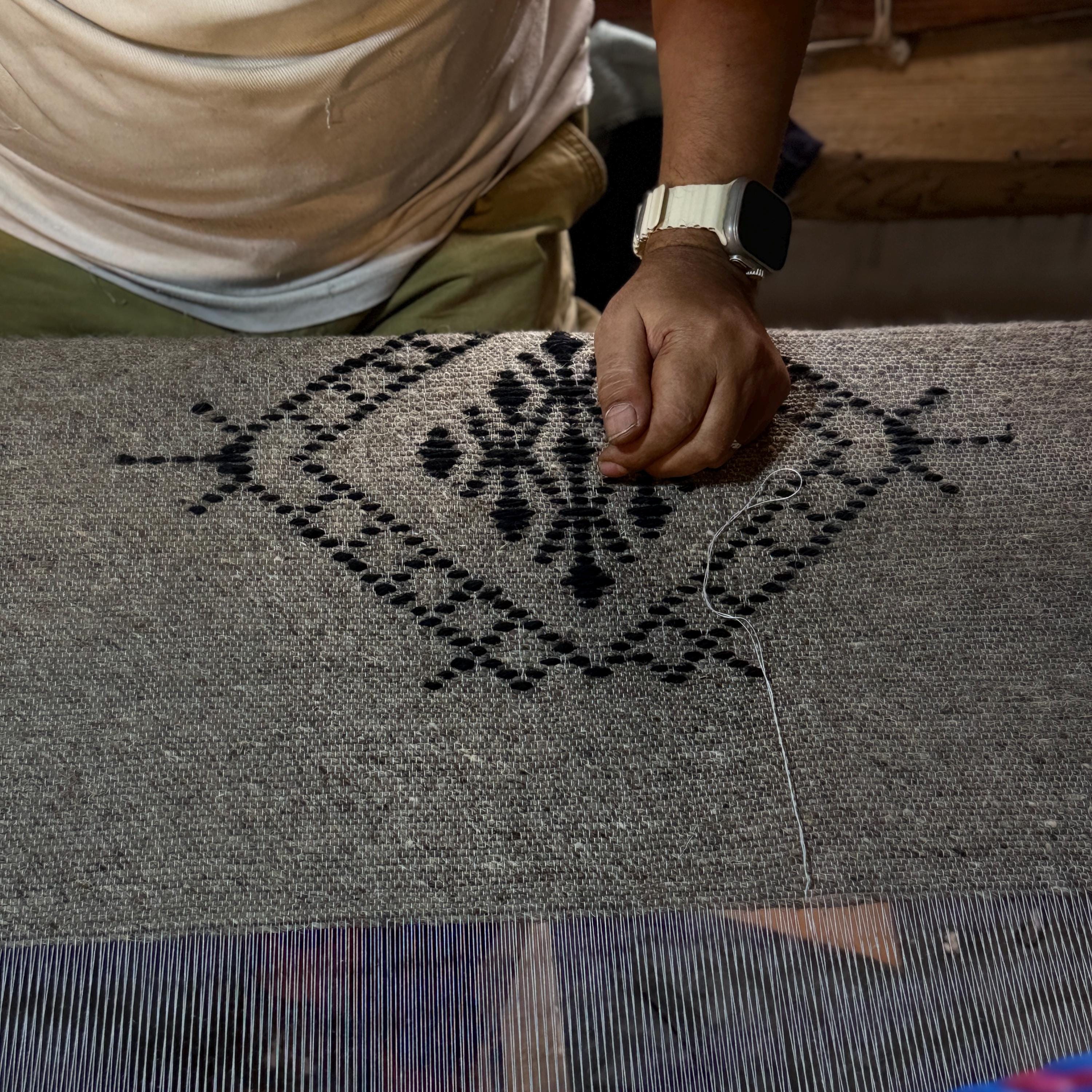
Figure 5. The motif forming dot by dot on the loom. This pattern is not drawn and copied —it is remembered and repeated.
· Shop the Collection
4 · Why Every Home Should Have One
We do not recommend a blanket because it fills a space. We recommend it because of whathappens to a house when a piece of real wool enters it.
Wool is a living material
Wool responds to the body. It holds warmth when the air is cold, releases it when the roomwarms, and absorbs and releases moisture instead of trapping it. That is why a wool blanket feelscalm against the skin rather than heavy on it — and why so many people describe their first nightunder real wool as a kind of relief they were not expecting.
It changes the temperature of a room
A room with a heavy natural textile in it feels different. Softer sound, warmer light, a sense ofsettledness. This is not decoration talk — it is the same reason people put rugs on hard floors.Wool absorbs, insulates and quietens.
It carries a feeling of another place
There is a particular sensation people report when they sleep under a blanket that was made byhand in a place they have never visited. It is not nostalgia exactly. It is closer to the feeling ofstanding in an old house — the sense that someone was here before you, and that you are brieflypart of a longer line. A blanket can do that. It is the only object in a bedroom that touches you allnight.
It is a daily contact with nature
You sleep against it. You sit under it. You drink tea with it over your knees. Of all the objects in ahome, a blanket has the most physical contact with the body — which is why its material mattersmore than almost anything else you buy.
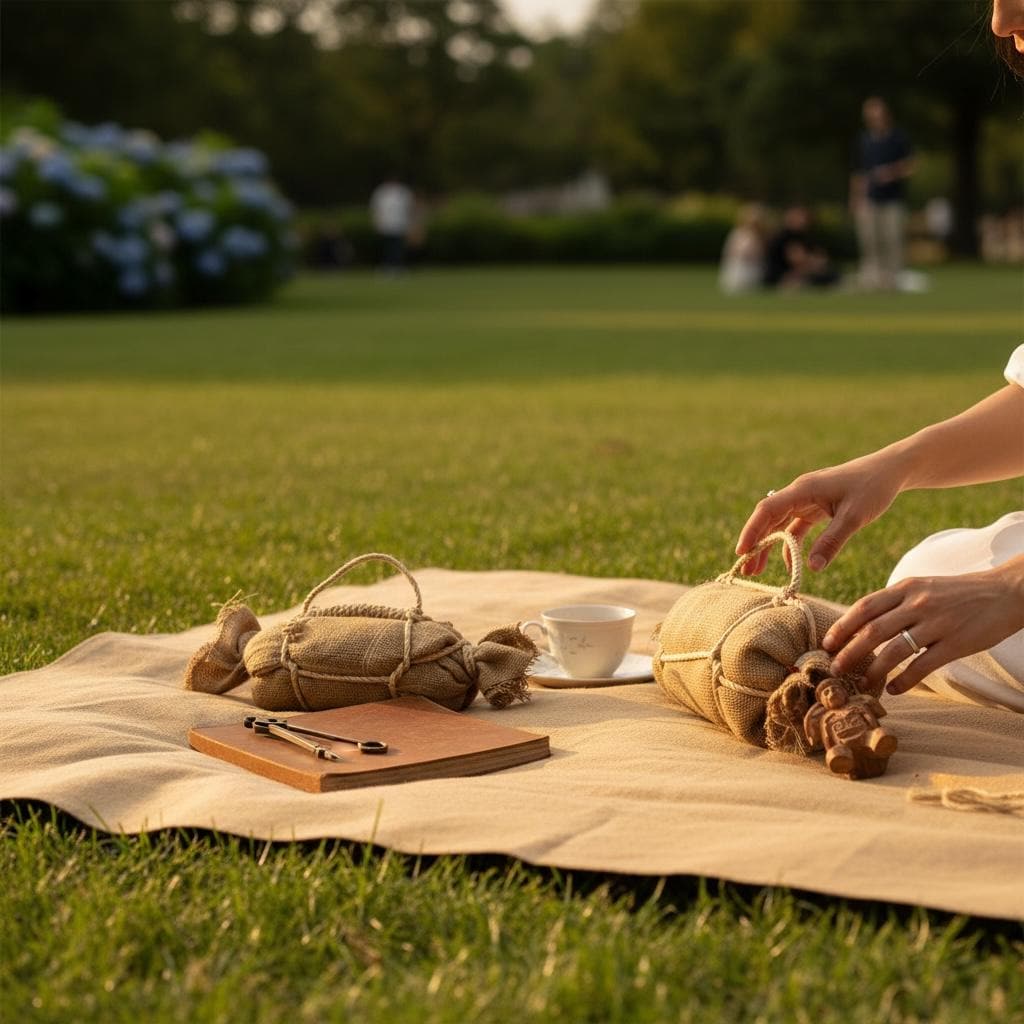
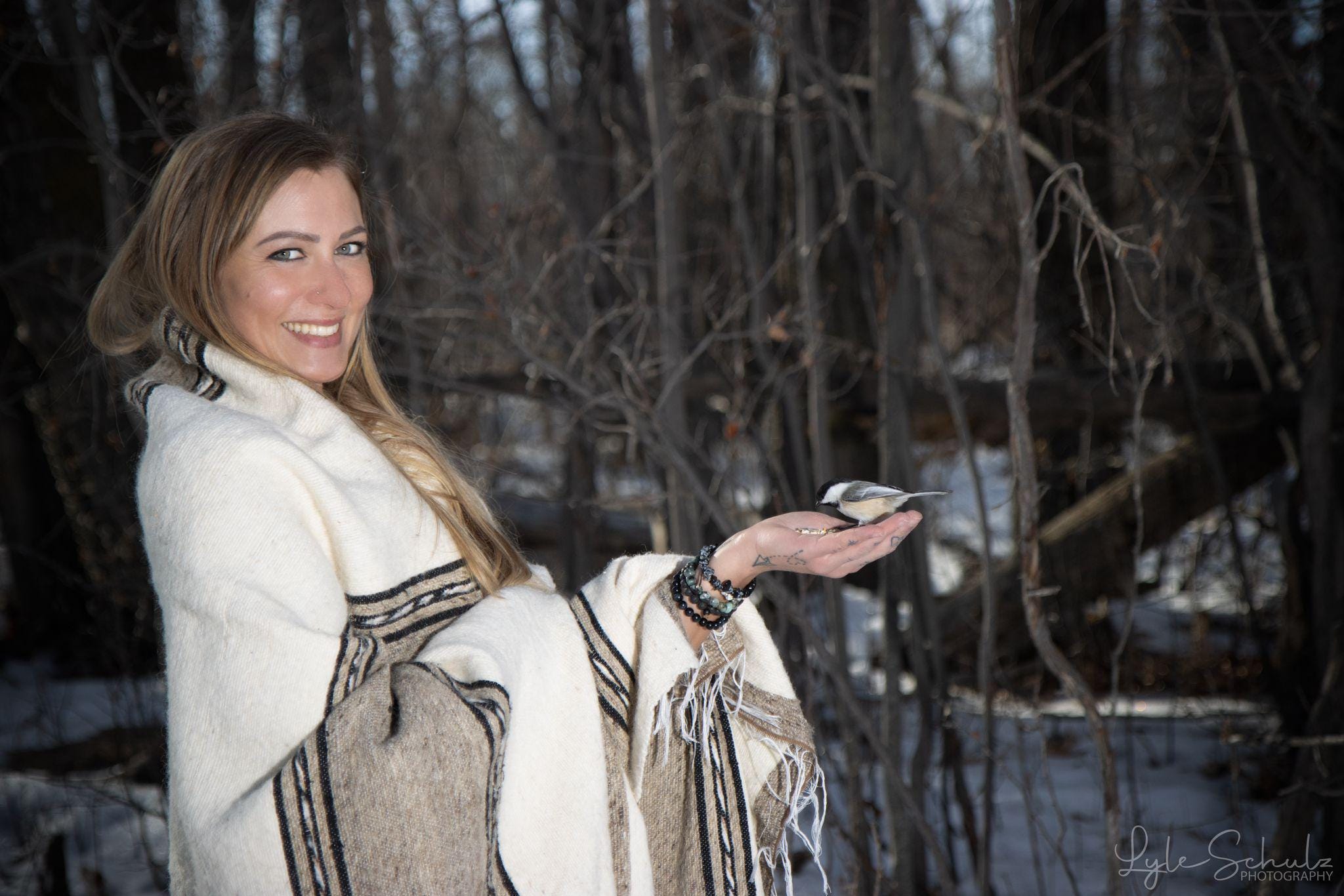
Figure 6. Slow afternoon, wool over your legs, light on the garden. This is what the blanket isactually for.
5 · The Material, Honestly
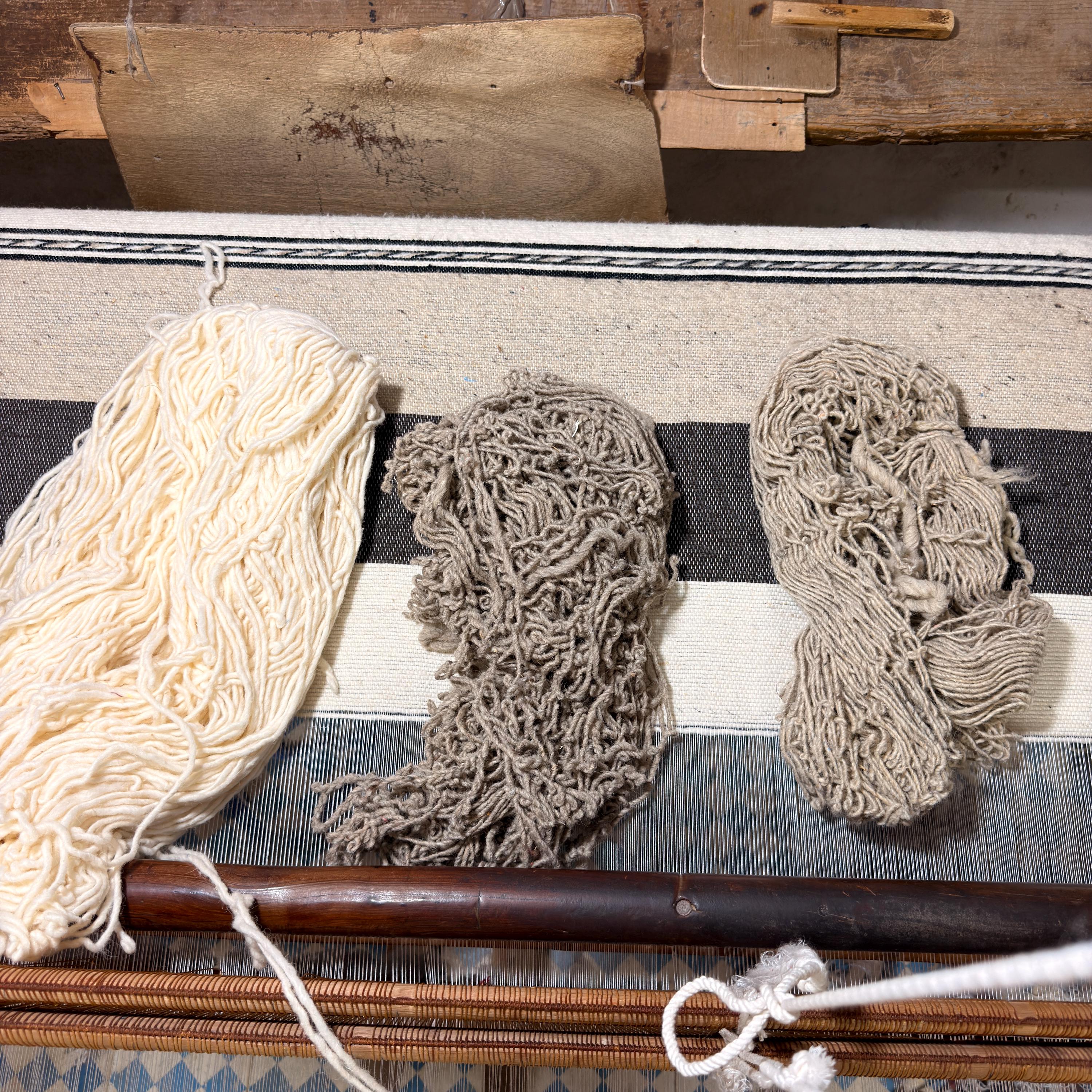
Table 1. What is actually in a Sahara Loom Studio piece
--------------------------------------------------------------
Element What it means in practice
---------------------------------------------------------------
Camel hair: Dromedary camel hair, blended with sheep wool. Naturally warm,insulating, and light for its heat.
--------------------------------------------------------------
Native sheep wool : Local fleece, spun and used as it has been for generations.
--------------------------------------------------------------
Undyed and untreatedfibres: No bleaching, no chemical softening. The fibre keeps its naturallanolin, which resists dust and moisture.
---------------------------------------------------------------
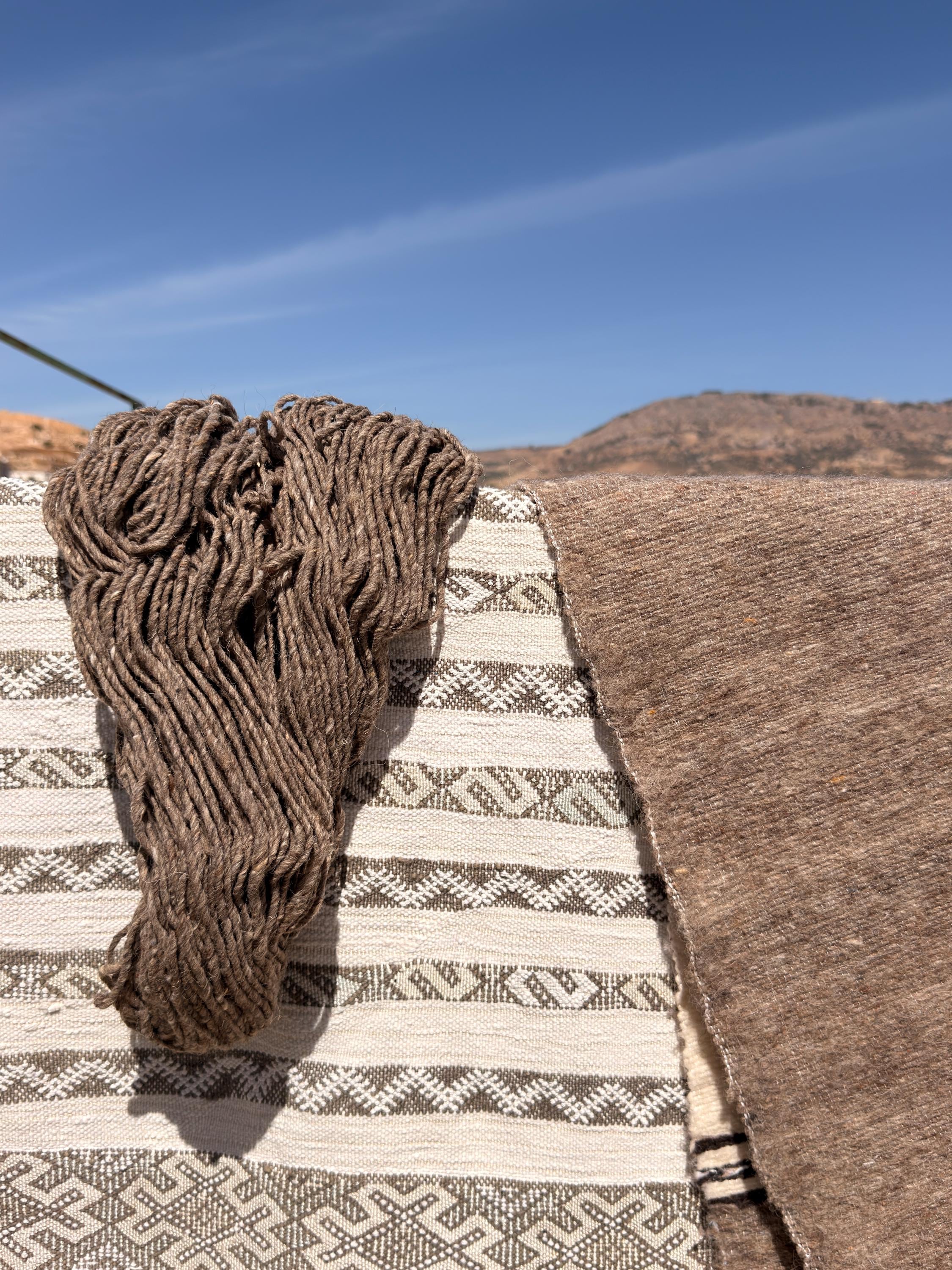
Natural dyes : Where colour is used, it comes from flowers, plants, minerals andstones rather than synthetic dyestuffs.
---------------------------------------------------------------
Earth tone palette : The colours of the land around us: camel, ivory, oat, grey, charcoal,indigo, olive, walnut.
---------------------------------------------------------------
Heavyweight flatweave : A dense, substantial cloth with real body.
---------------------------------------------------------------
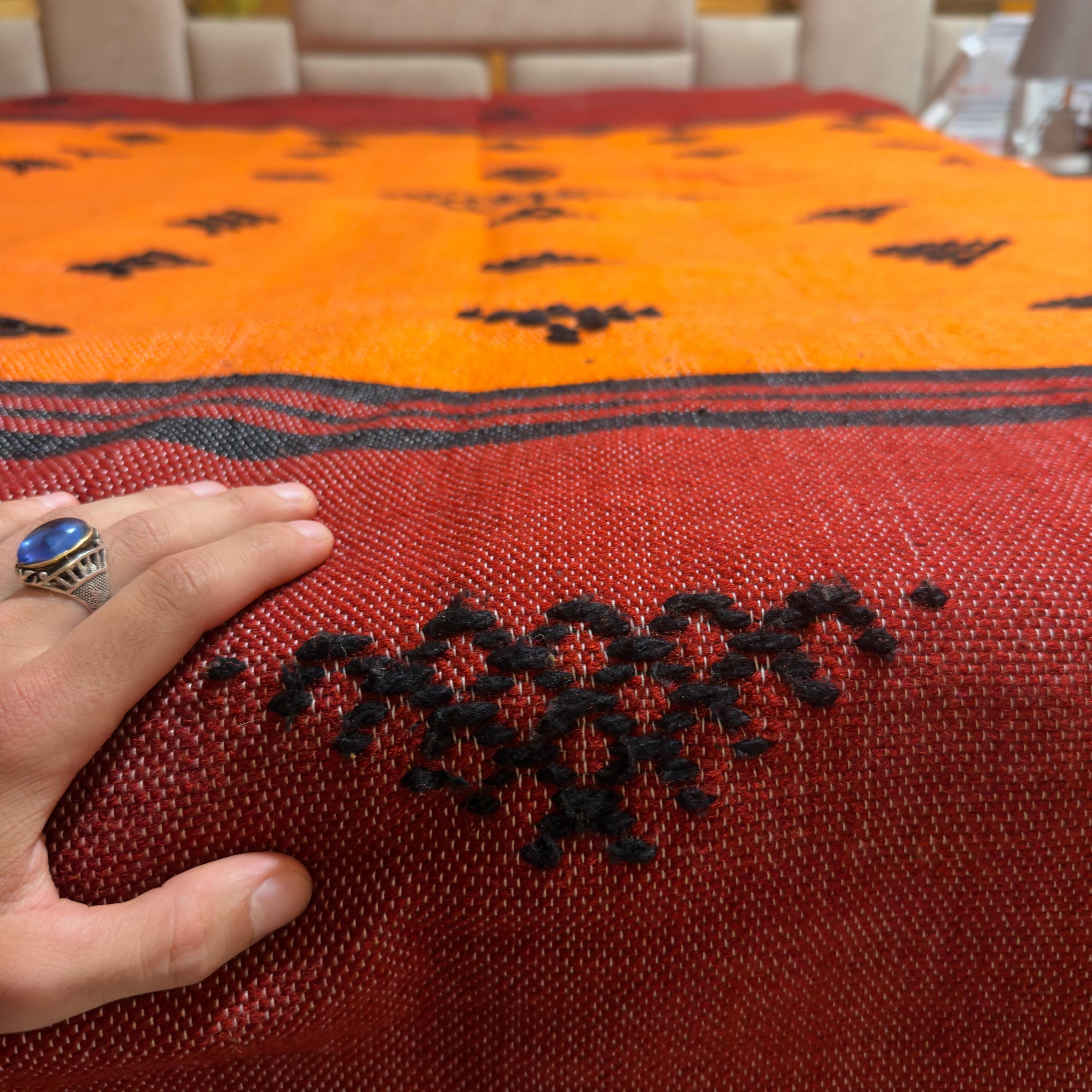
Hand-embroideredmotifs : The black geometry is stitched after the weaving, by hand, one motifat a time.
---------------------------------------------------------------
Slight variation piece topiece: Unavoidable and deliberate. A hand cannot repeat itself exactly, andshould not.
---------------------------------------------------------------
We describe what we can prove. We do not claim medical benefits, and we never present a fibreas a treatment. If a fabric is good against the skin, that is a property of the material and not apromise about your health.
· Shop the Collection
6 · How Wool Works With Your Body
Everything in this section is about comfort, temperature and rest — the things a textile genuinelydoes. We make no medical claim, and we do not present wool as a treatment for any condition.What follows is what the fibre does when it is next to your skin, which is why people reach for itnight after night.
It breathes instead of trapping
Wool is not a sealed membrane. The natural crimp of the fibre and the air held between the fibreslet moisture move out and air move through. A synthetic blanket tends to hold warmth and holddampness with it. Wool releases the dampness and keeps the warmth — which is the differencebetween waking up warm and waking up cold and clammy at three in the morning.
It manages moisture, which is why it does not feel wet
Wool can take up a substantial share of its own weight in water vapour before it ever feels dampto the touch. That moisture is held inside the fibre, not lying against your skin. In practice this iswhy wool feels dry and calm even on a humid night, or through a feverish sleep.
It regulates, so you are not fighting it
A breathable fibre helps the body hold a steadier temperature. You are not choosing betweenbeing too cold and throwing the blanket off. In our experience, and from what customers write tous, this steadiness is the most repeated compliment — not that it is warm, but that it is warmwithout being heavy.
The natural lanolin
Undyed, untreated wool still carries some of the lanolin the animal produced. Lanolin is whatmakes the fibre naturally resistant to dust, damp and the bacteria that cause smells. It is also whywool stays fresh longer between washes than synthetics, and why it does not develop that closed,stale feeling.
The texture and the weight
A dense, firm weave sits against the body and stays where you put it. Together with the weight ofthe cloth, that is what makes a wool blanket feel supportive — and a supportive layer is easier torest under than a loose one that slides off. We describe the texture as firm and tactile. We do notclaim it massages, stimulates circulation, or treats anything.
Warmth, then rest
If we are honest about the sequence, this is it: the wool keeps you at a comfortable temperature,the comfort lets you rest, and rest is what restores you. We would rather say that plainly thanwrap it in a therapeutic promise we cannot prove.
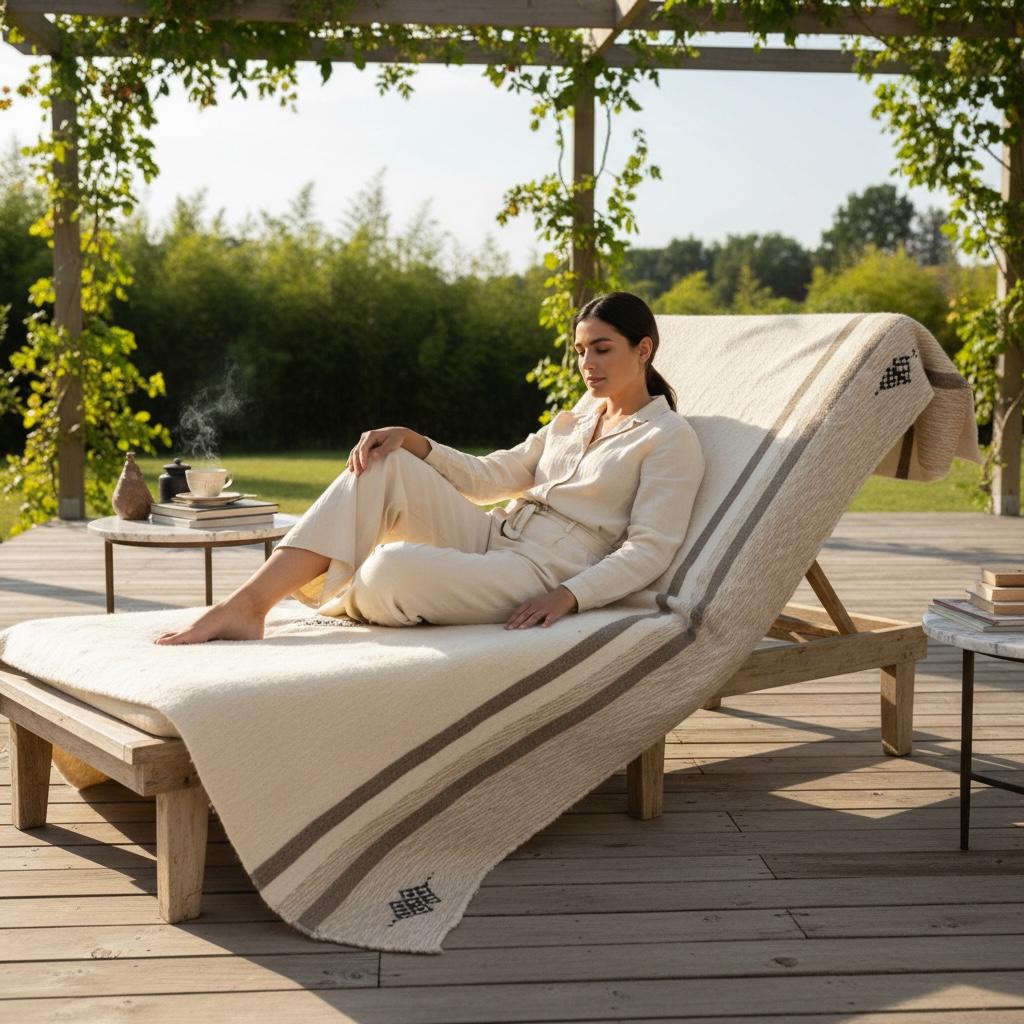
Figure 7. Warm, breathing fibre and a quiet hour. Comfort is the mechanism — rest is theresult.
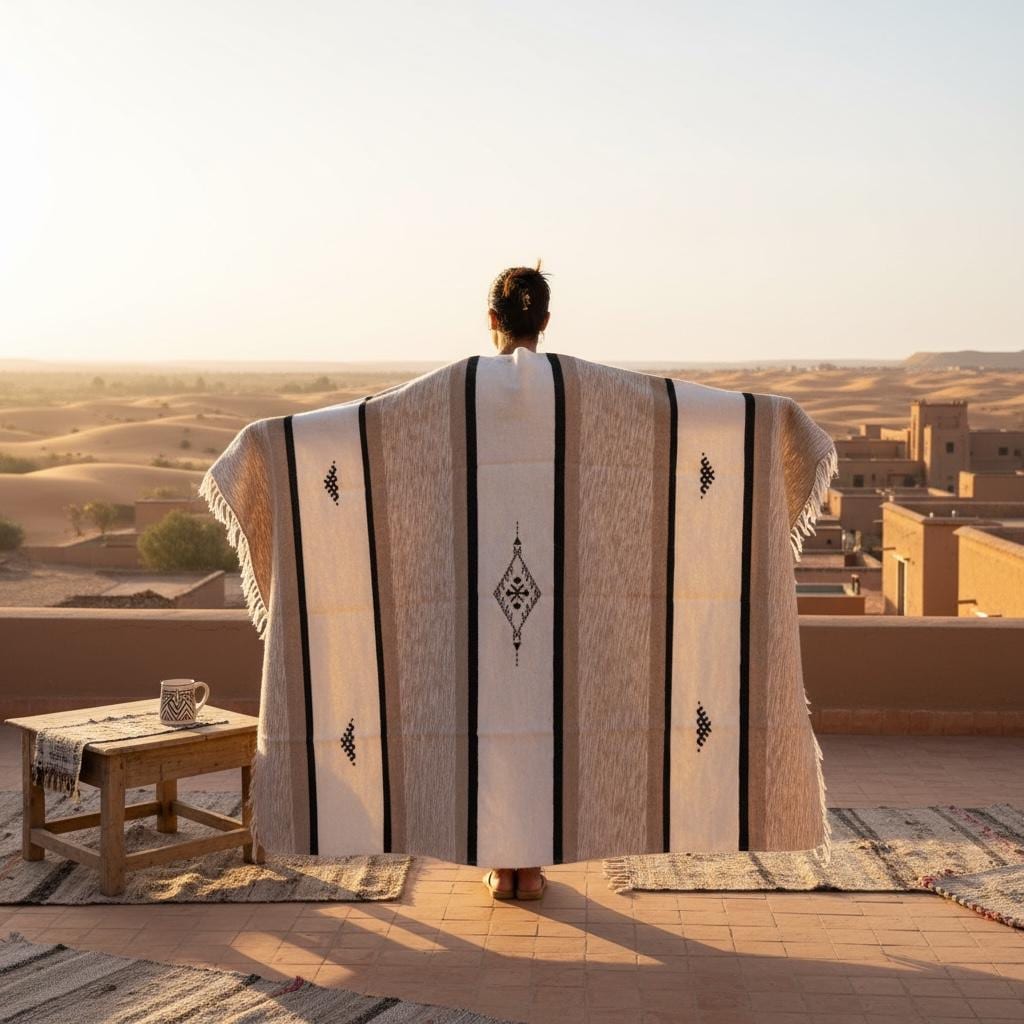
Figure 8. Undyed wool against skin in daylight. No chemical softening, nothing between youand the fibre.
Each fibre has its own character
Table 2. How the fibres differ, and what each one is for
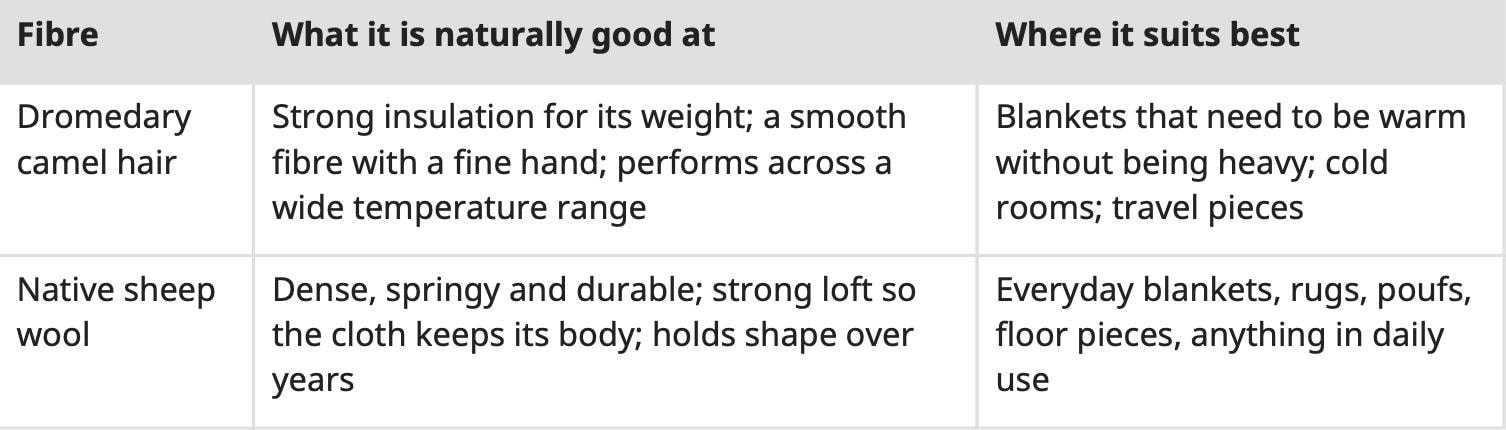
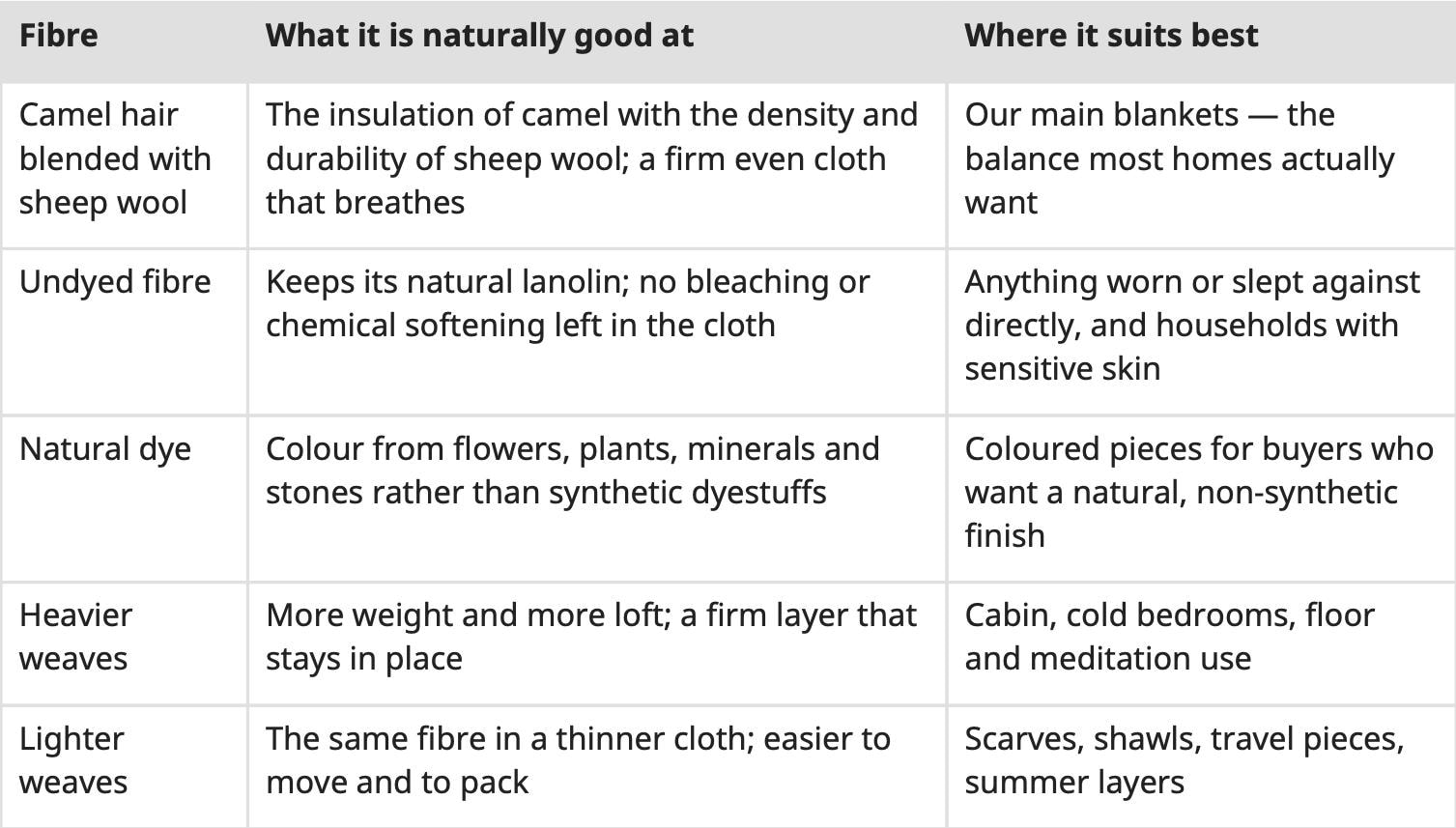
A note that matters practically as well as medically: wool is not one material. Camel hair, sheepwool, alpaca, mohair and cashmere behave differently against the skin and differently with heatand moisture. Our blankets use camel hair and native sheep wool, and we describe those two. Ifyou have a diagnosed skin condition, an allergy, or any medical concern, please speak to yourdoctor rather than to a shop — including ours.
7 · The Language of the Motifs
The black geometry that runs through our blankets is not ornament. In Berber tradition thesemarks are called tattoos — signs that identify the family and the tribal origin of the weaver. Theyare a signature written in wool.
• Central motifs often represent the eye — protection for the home and for the people inside it.
• Borders mark boundaries: the edges of family land, and the safety within them.
• Smaller repeating shapes between the main motifs carry the weaver's own family line.
• Some symbols record the region, the season, or a specific event in the household's life.
We explain these meanings as they were taught to us, inside our own family and community. Wedo not claim to speak for every Berber group, and we do not present a single symbol as auniversally agreed definition. Where a meaning is disputed or uncertain, we say so. That honestyis the point.
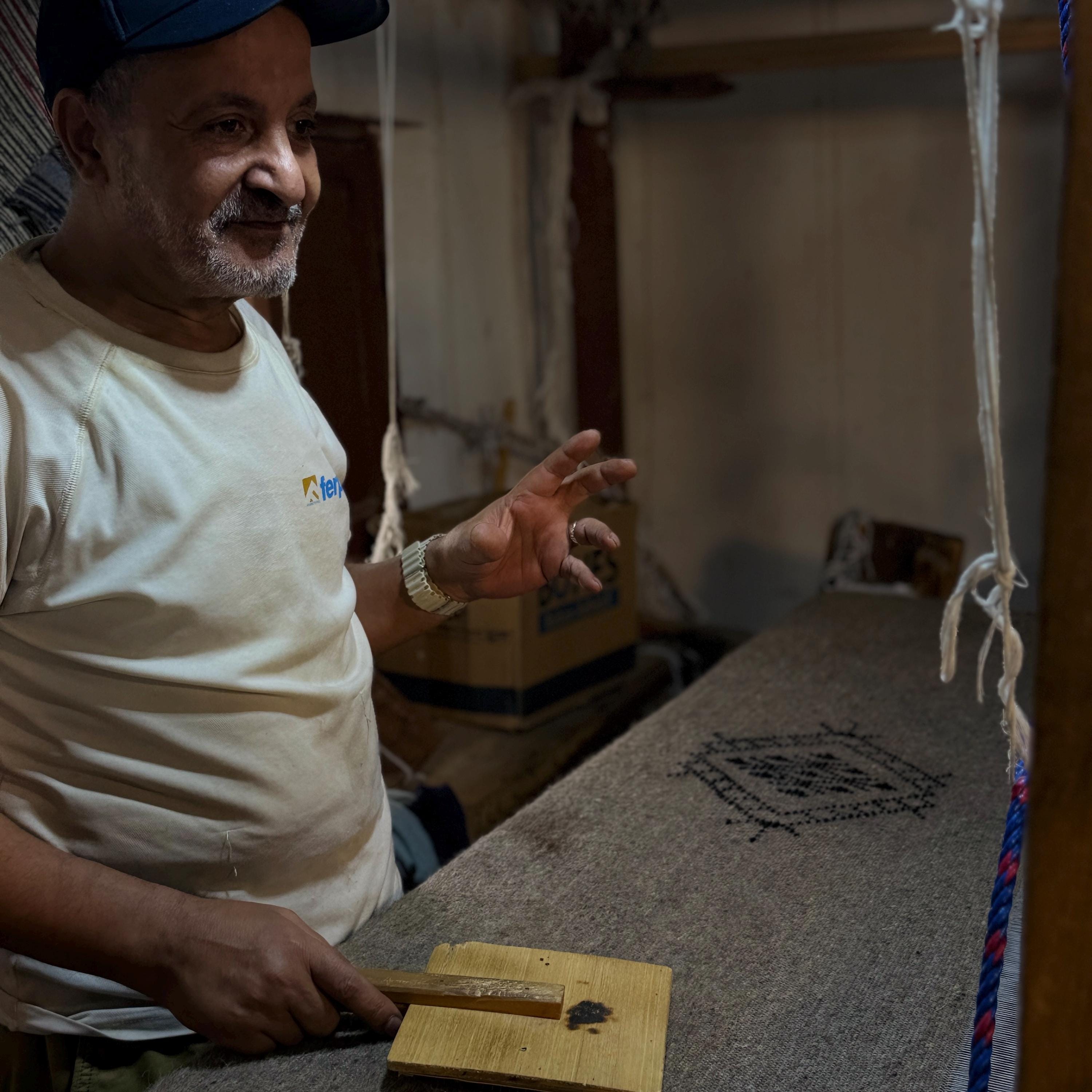
Figure 9. My father explaining a motif. This knowledge has never existed in a book — itmoves from hand to hand.
· Shop the Collection
7 · How a Blanket Is Made
• The fleece is collected, sorted and cleaned by hand.
• It is carded to open the fibre, then spun into yarn — by hand or on a simple wheel, dependingon the piece.
• Where colour is needed, it comes from natural dyes: plants, minerals, stones, flowers.
• The warp is measured and threaded onto the loom. This is the slowest and least forgivingstage.
• The weft is worked row by row. The pattern is carried in the weaver's memory, not read from achart.
• The motifs are embroidered by hand after the weaving is complete.
• The piece is washed, beaten, stretched, finished and inspected.
• Only then does it get folded, wrapped and prepared for shipping.
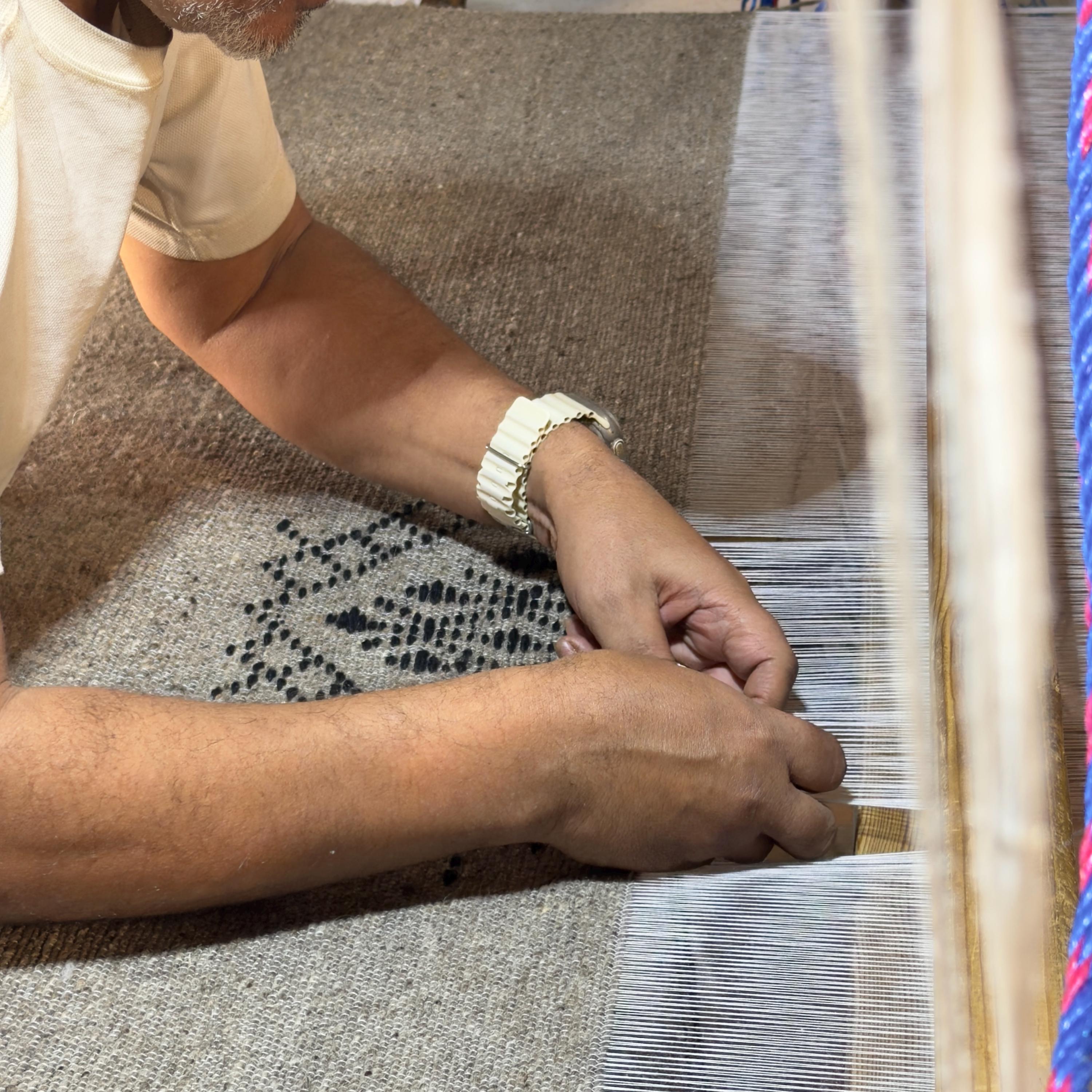
Figure 10. Working the weft through the warp. Every row is set by hand, checked by hand,and corrected by hand.
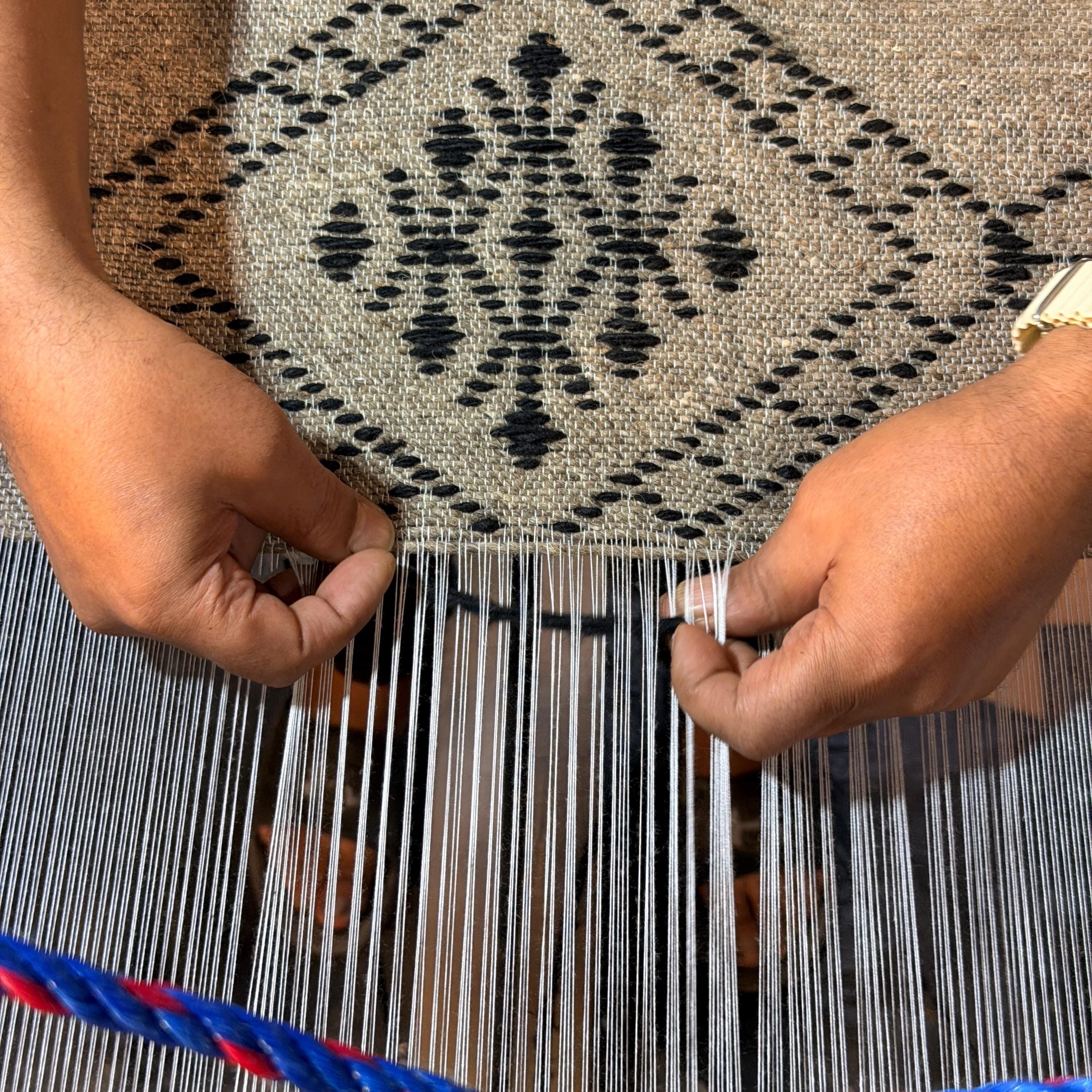
Figure 11. Finishing the edge. The last row is where the quality of a blanket is decided.
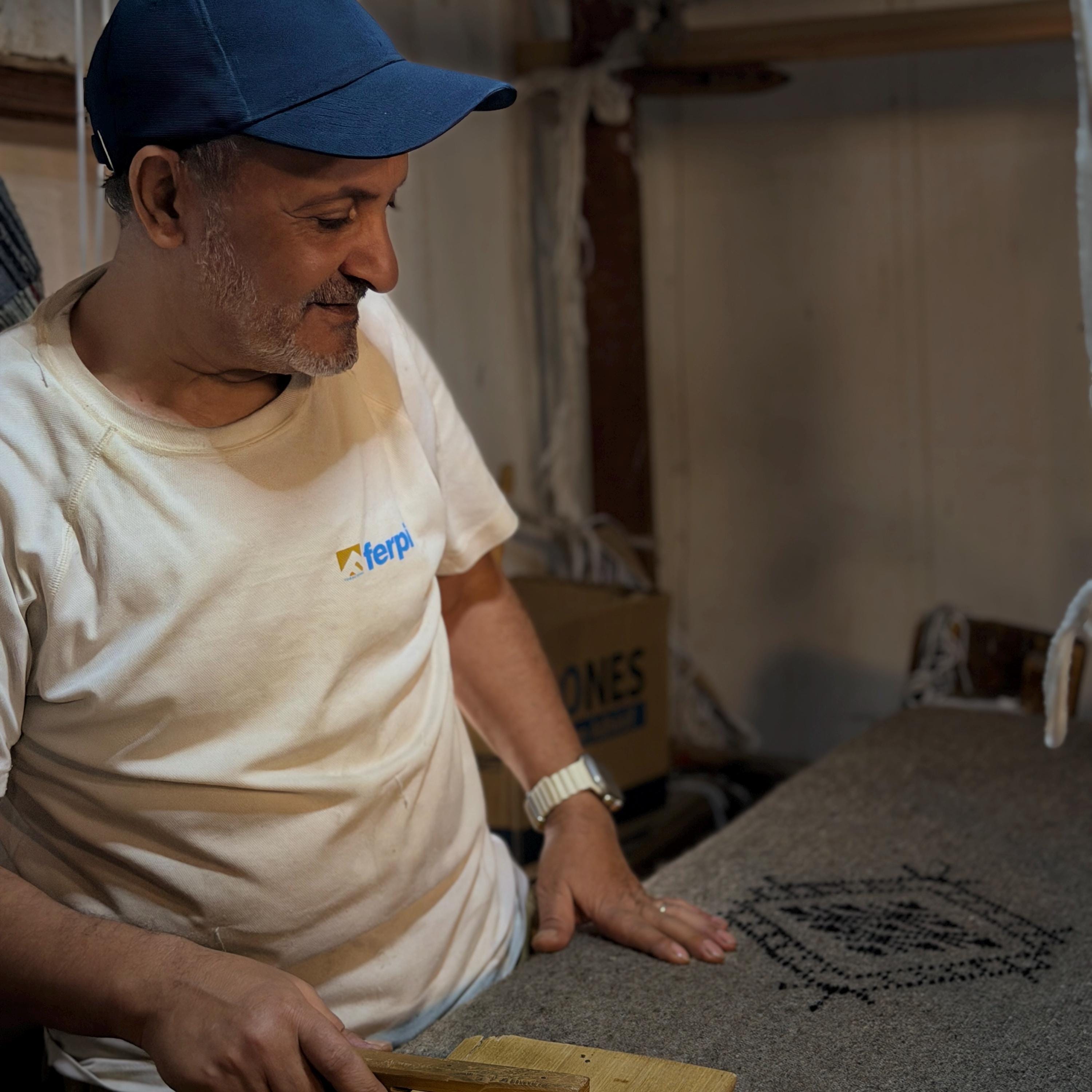
Figure 12. Pressing the weave with a wooden mallet so the cloth sits dense and even.
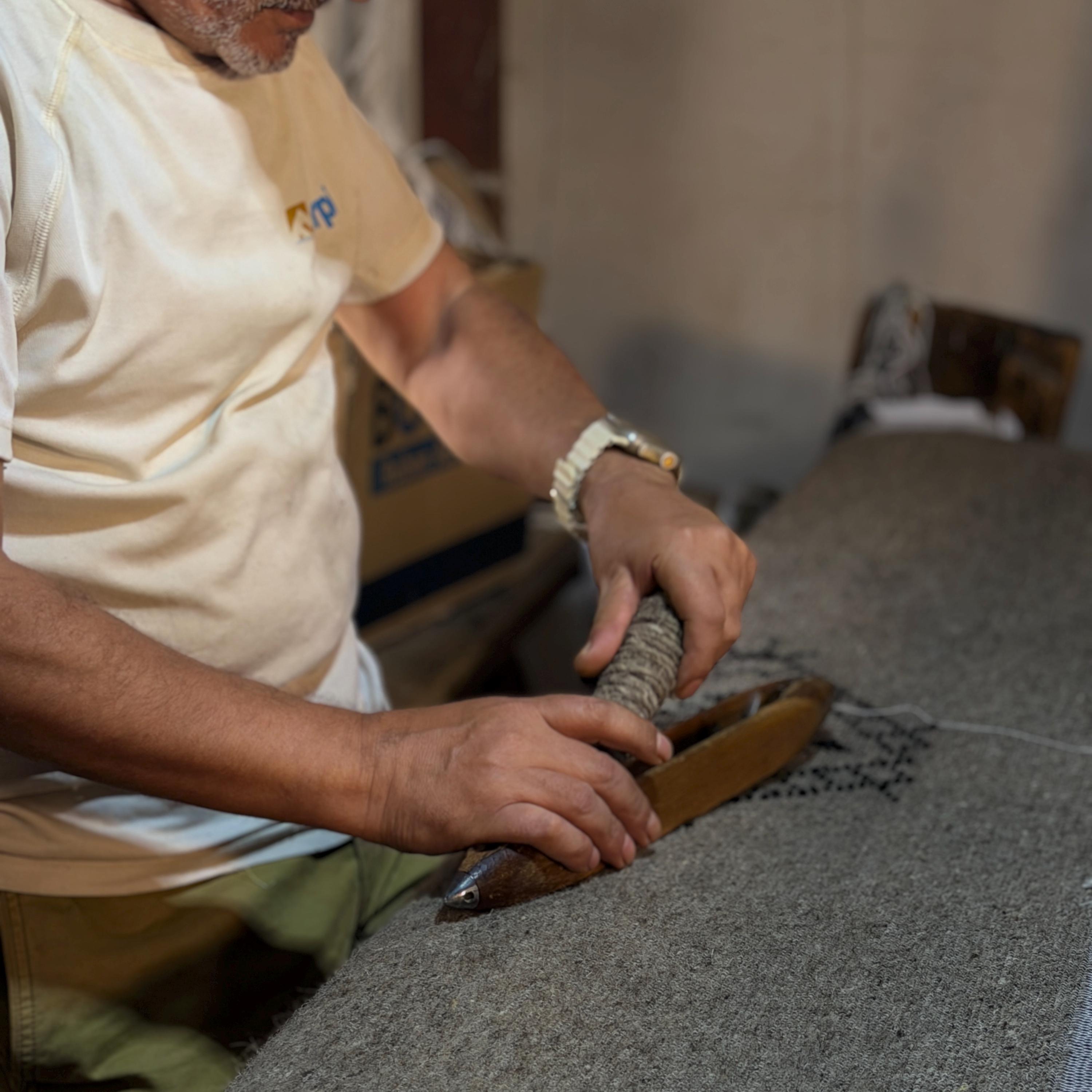
Figure 13. The same tool, the same motion, passed down through the family.
· Shop the Collection
8 · Use It Everywhere — Twenty Real Ways
A blanket only earns its place when it gets used. These are the uses customers write to us about.
Living room and sofa
• Draped over the back of a sofa as the colour anchor of the whole room.
• Folded in a stack on an ottoman, within reach.
• Over the arm of a reading chair, ready before you sit down.
• On a leather armchair to protect it and warm it.
• Laid across the floor in front of a fireplace as the family gathering spot.
Bedroom
• As a bedspread over a duvet — a flatweave sits flat and does not slide.
• As a full bed cover in summer over a light sheet.
• Folded across the foot of the bed as a contrasting layer.
• Under the sheet as an extra layer in a cold house.
• As a finished cover in a guest room, so the room looks complete in one piece.
Reading nook, office and studio
• Around your shoulders at a desk on a long afternoon.
• Over the back of an office chair as a lap blanket.
• Under a laptop on a cold table.
• In a studio corner as a textured backdrop for photographs.
Cabin, second home and outdoors
• On a cabin bunk or a porch bench after a walk.
• In the car for a long winter drive.
• On a porch chair with a mug of tea at sunrise.
• As a picnic layer on grass or cold stone — heavy enough not to blow away.
Quiet and ritual
• Over the lap during meditation, so there is no draught.
• On the floor for stretching or yoga.
• Beside a journal and a candle as the anchor of a slow morning.
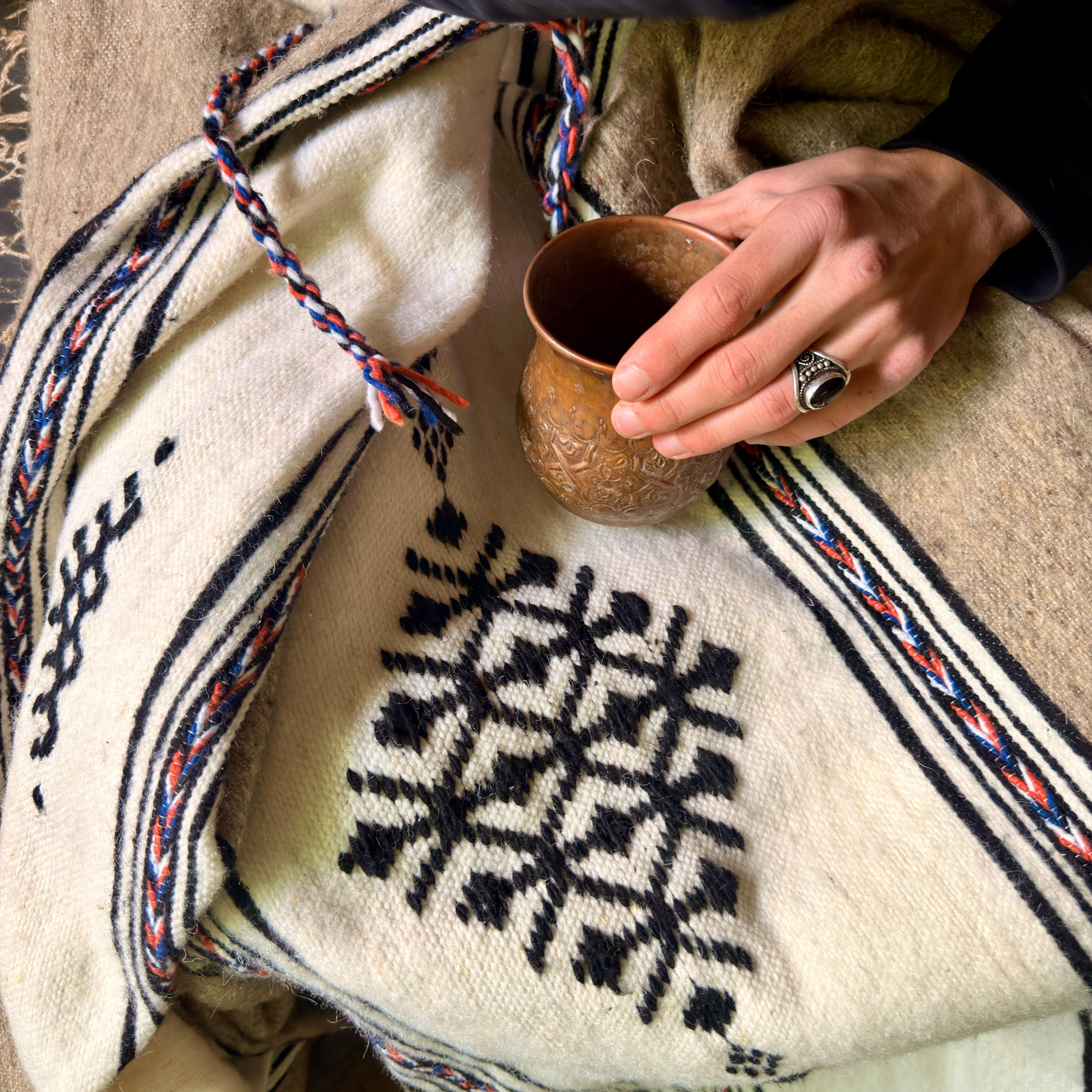
Figure 14. The woodland bench. A wool blanket belongs outdoors as much as it belongsindoors.
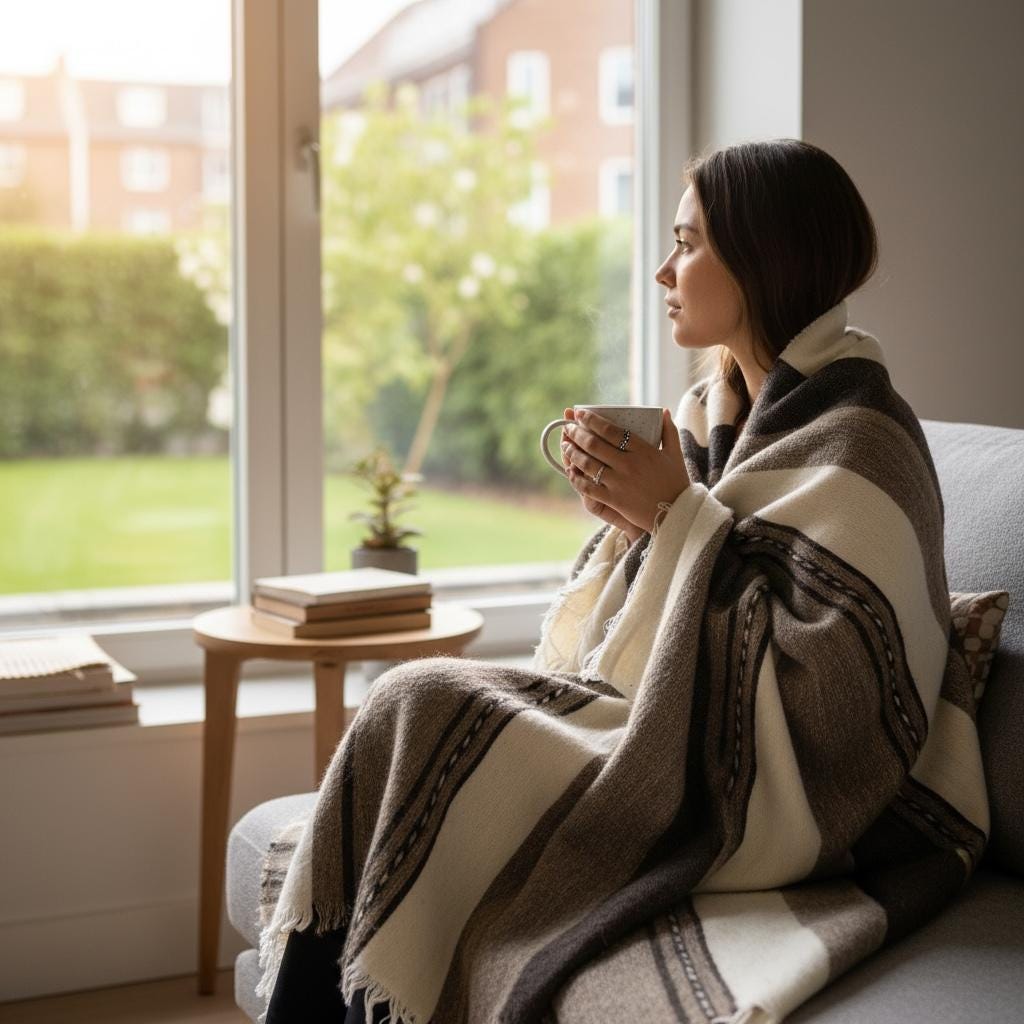
Figure 15. Wrapped and warm indoors. The same object, entirely different feeling.
Wrapped and warm indoors.
· Shop the Collection
9 · Care, Washing and Living With Pets
Everyday care
• Air it regularly. Wool freshens in open air — a few hours over a chair is often enough.
• Spot clean small marks with cold water. Dab, do not rub.
A full wash
• Gentle wool cycle on your machine, cold water, low spin — or cold hand wash.
• Wool-safe detergent only. Never a biological or enzyme powder; enzymes break down animalfibre.
• Lay flat to dry, away from direct sun and away from radiators. Never tumble dry, never wring.
If you live with a dog or a cat
They will find the blanket. Every time. This is the one blanket in the house you do not have toguard.
• Washable means recoverable — muddy paws, hairballs and mystery smells all come out in acold wool cycle.
• Wool resists odour and dirt naturally. The lanolin that makes it soft also makes it hostile todamp and to the bacteria that cause smells.
• The dense weave takes claws. This is a flatweave with real body, not a loose knit that pulls onethread and unravels.
• Expect the cat to claim it as a bed and the dog to treat it as a shared sofa. Customers send usphotographs of exactly that, and we treat it as the highest review a blanket can get.
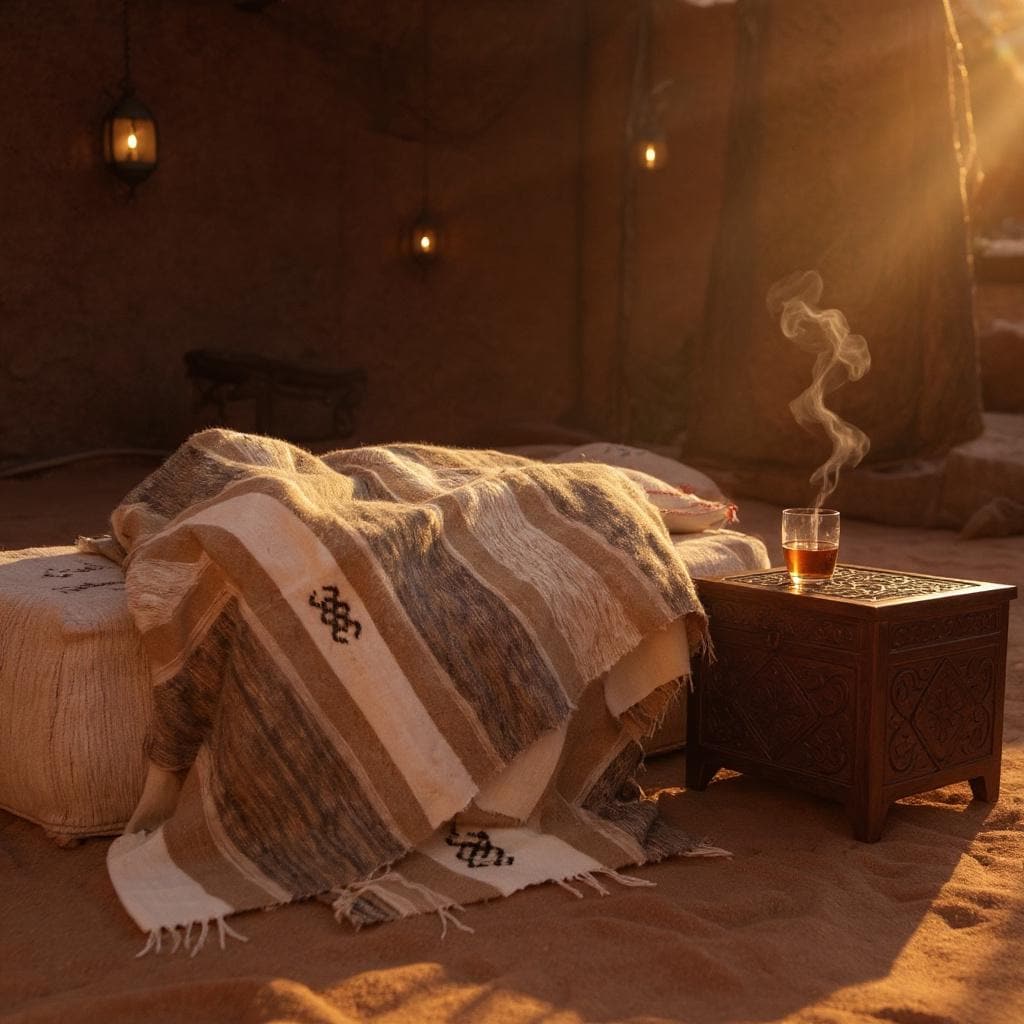
Figure 16. Tea, wool and a quiet hand. Craft that is meant to be used daily, not preserved ona shelf.
10 · Styling It in Your Home
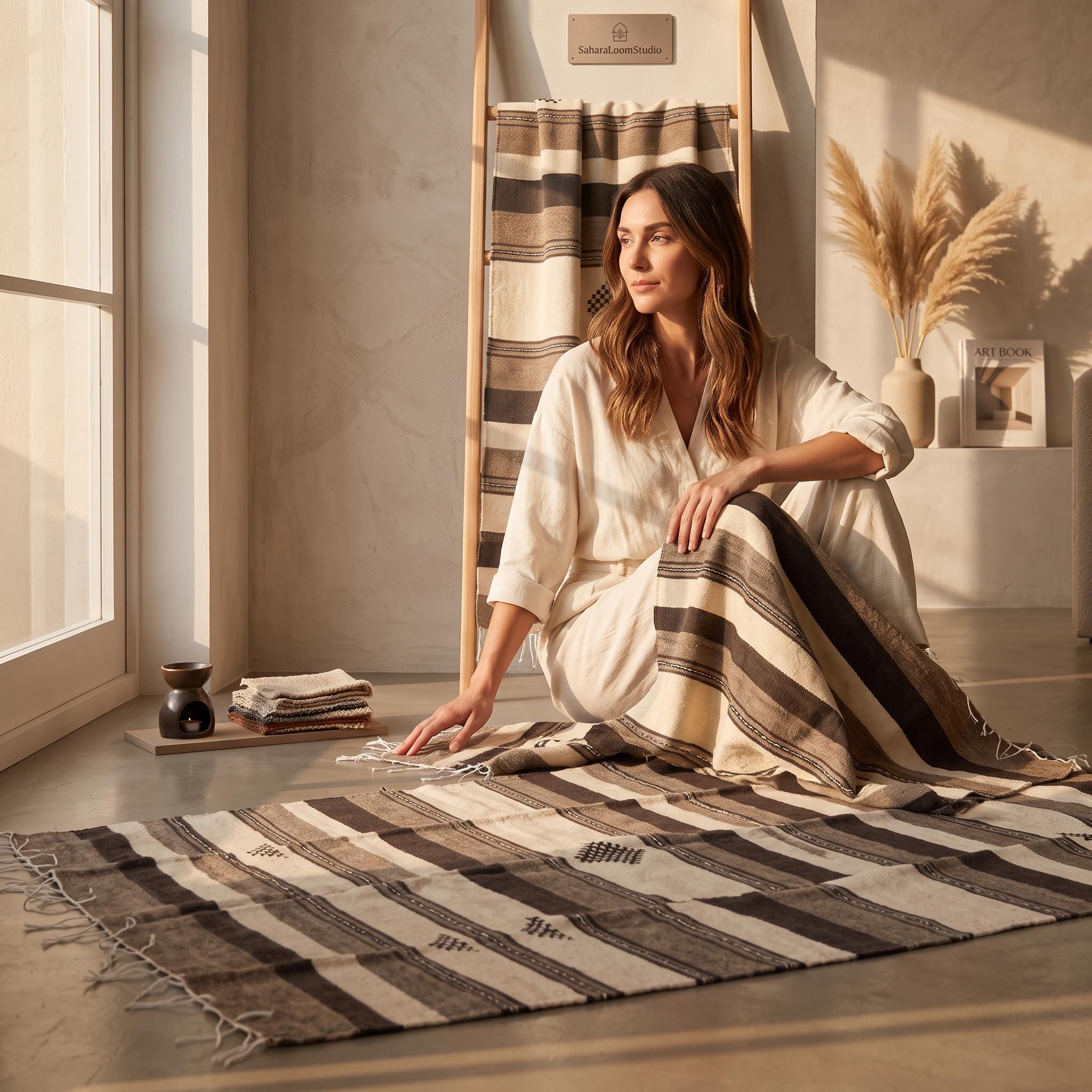
The same piece reads differently depending on how it is set. The photographs below show thecollection in different moods and different rooms.
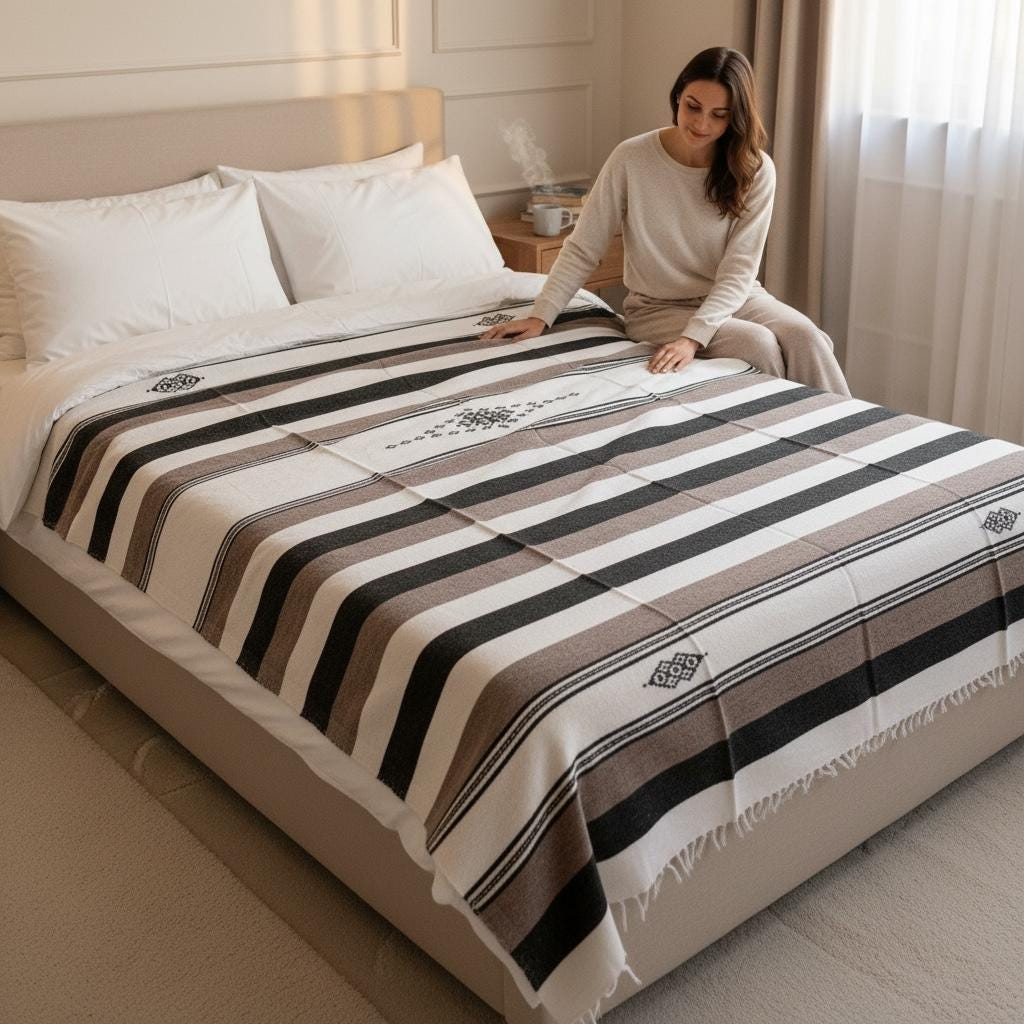
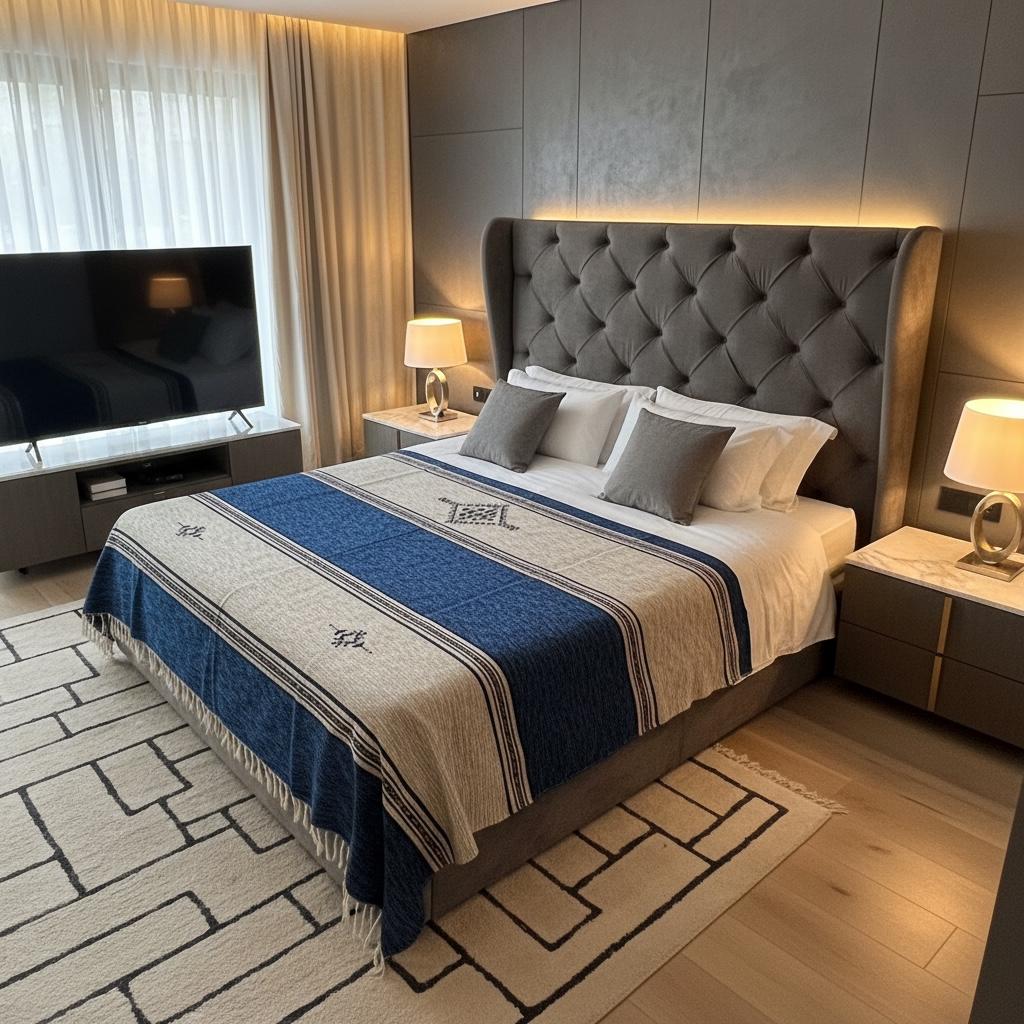
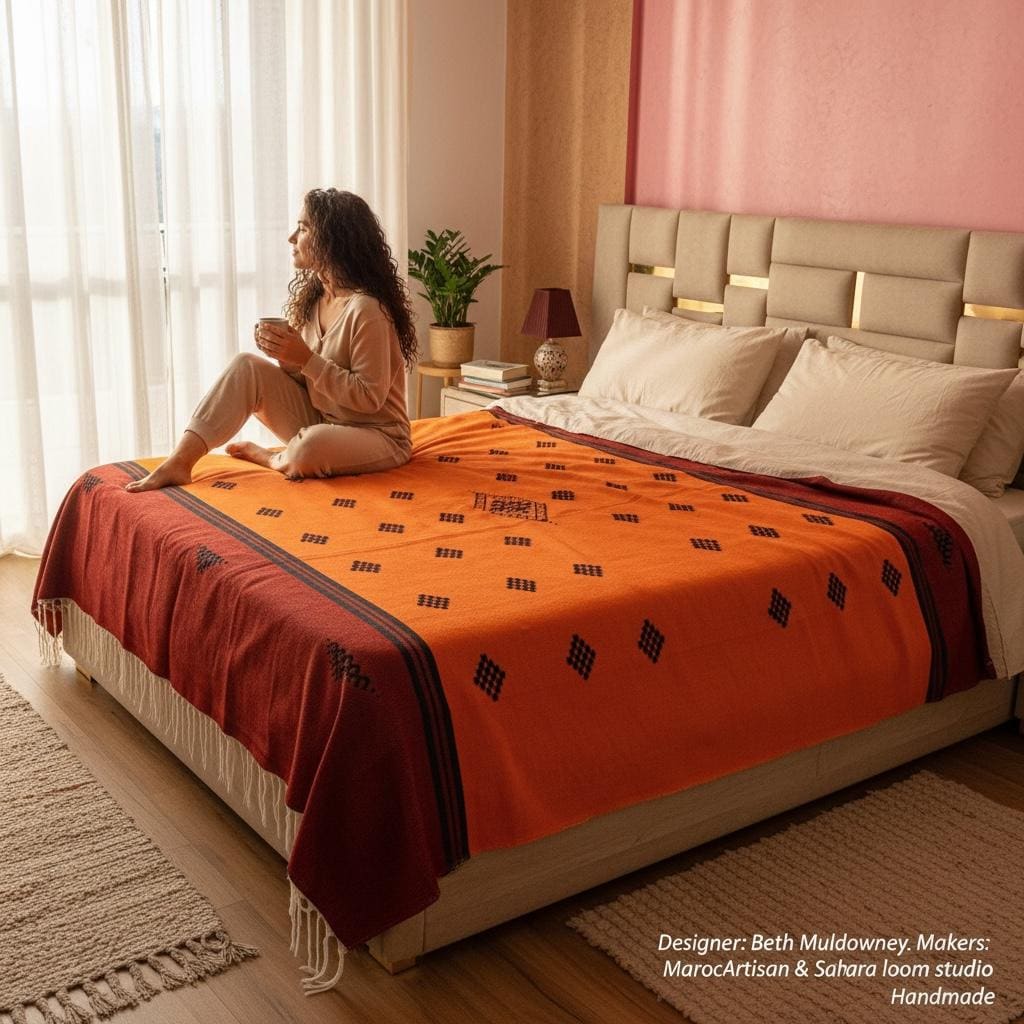
Figure 17. Bedroom styling — as a bedspread, wrapped around a neutral bed. Calm, warm,and quietly expensive without saying anything.
------------------------------------------------------------------
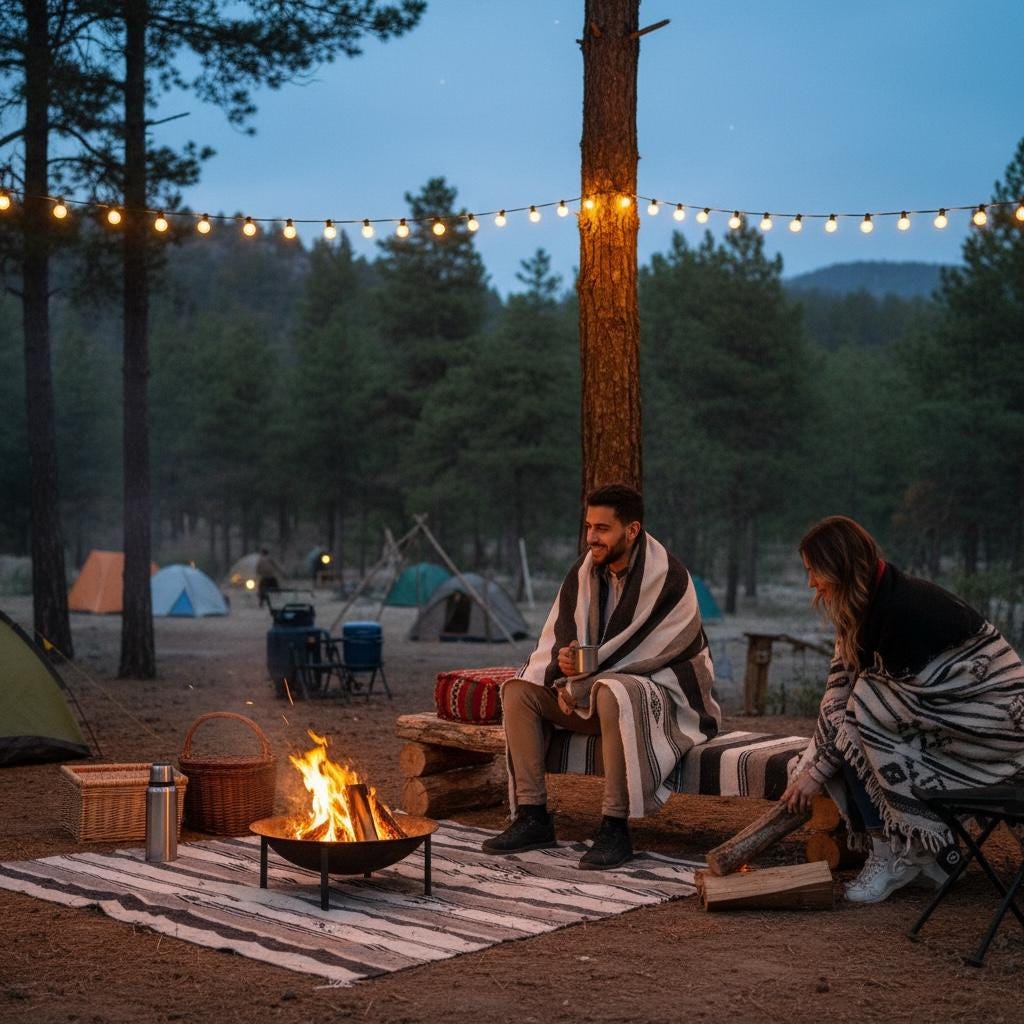
Figure 18. Outdoor styling — on a bench in natural light. This is how the blanket looks whenthe room is the landscape.
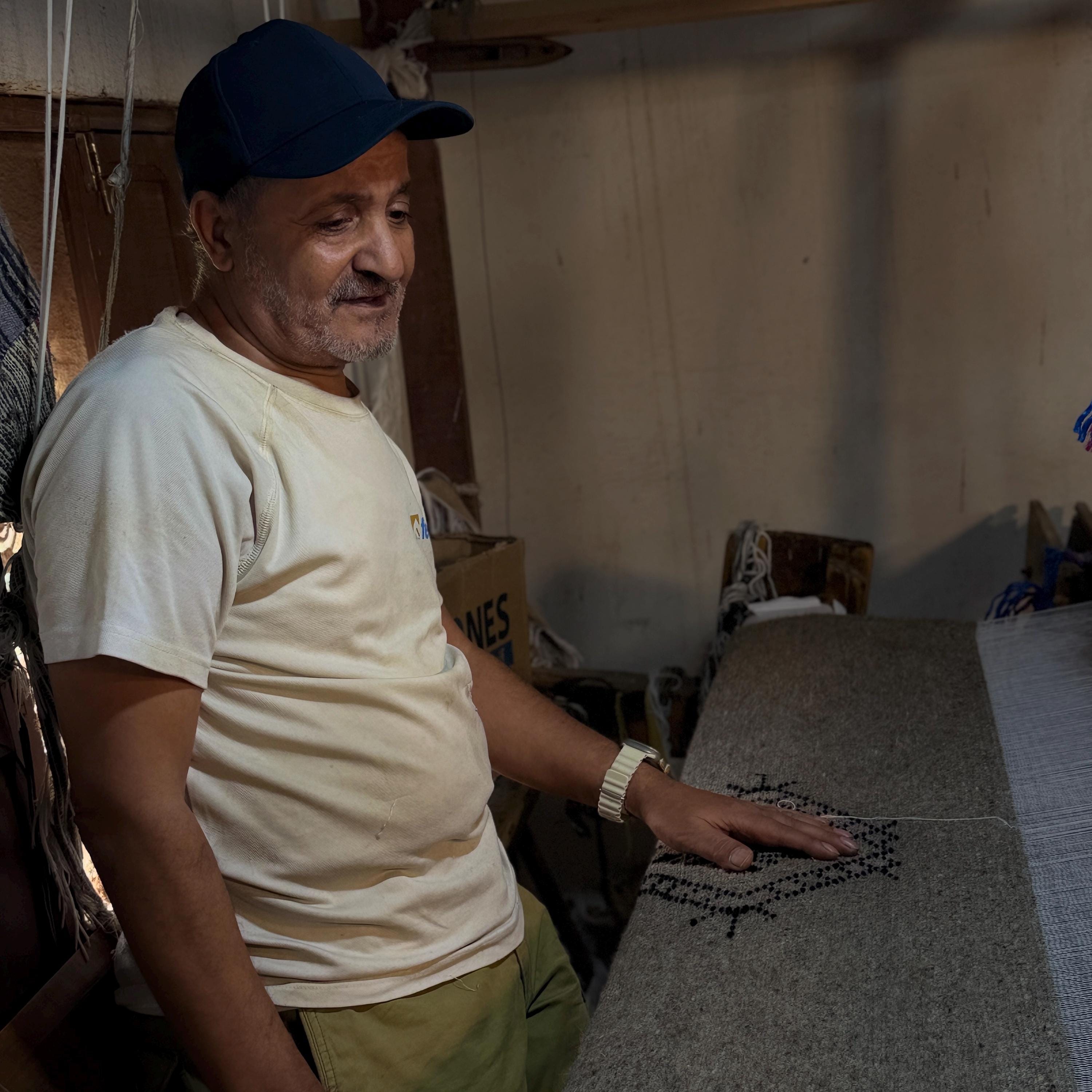
Figure 19. Evening styling — in low warm light, which is when the earth tones come alive.
11 · Made to Order, Shipped From Morocco
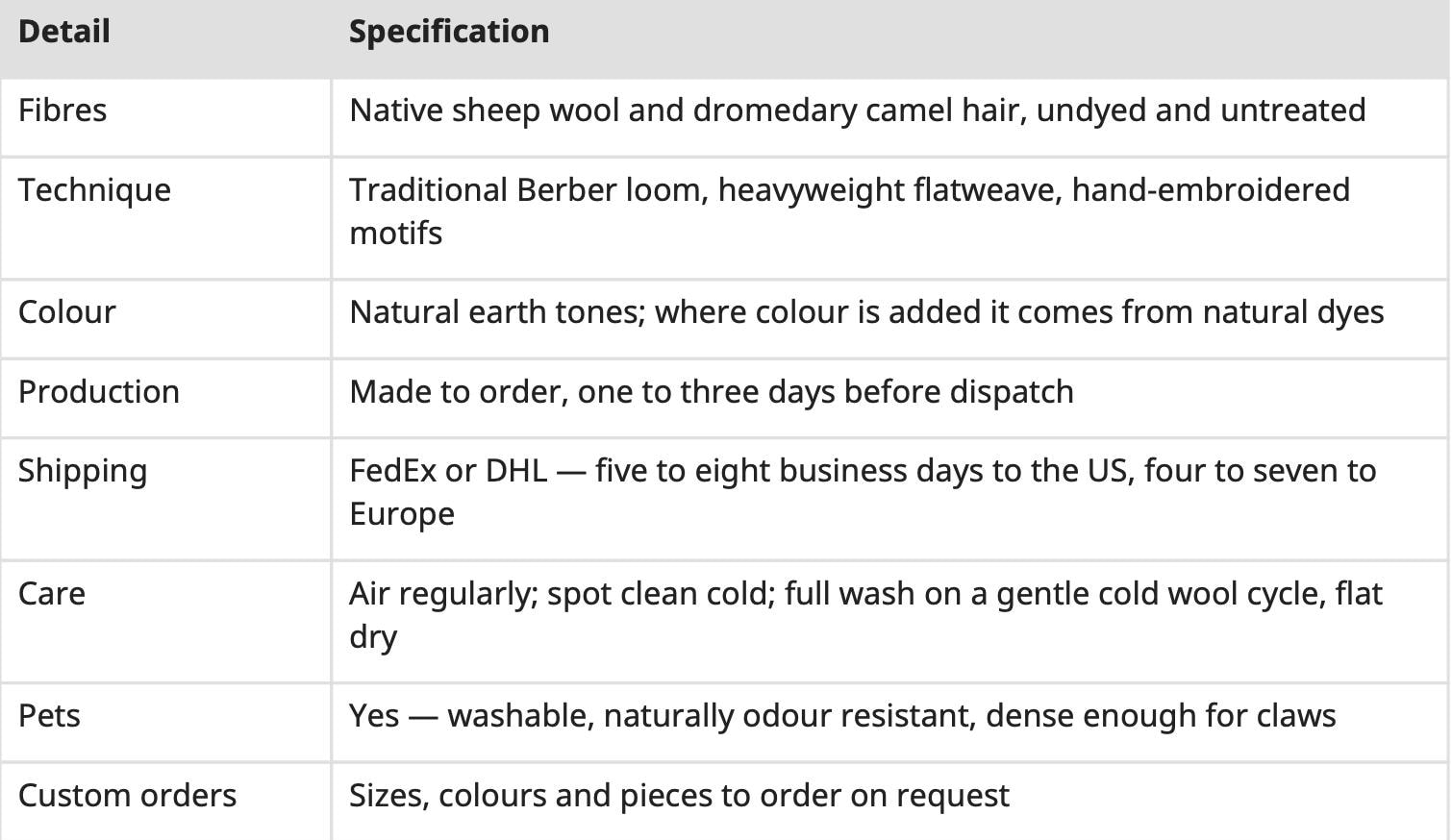
Your piece is woven after you order it — not pulled from a shelf where it has been sitting inplastic. Production takes one to three days, then delivery normally runs five to eight business daysto the United States and four to seven to Europe, by FedEx or DHL.
Every piece is woven individually, so a slight variation in tone and pattern is part of what makesyours yours. If that sounds like a defect, it is the reverse: it is the difference between an objectthat was made and an object that was manufactured.
Table 3. The specification, plainly statedDetail Specification
Origin : Handwoven by our family workshop in Fes, Morocco
12 · What Your Purchase Actually Does
This is the part we do not want to say as a marketing line, because it is not one.
It is arithmetic.
• It pays a weaver a fair price for skilled work, in a region where that is not guaranteed.
• It keeps a loom threaded, and a set of patterns alive in a living memory rather than a museum.
• It lets a young person in a Berber family see a future in this craft instead of choosing betweenit and a living wage.
• It supports a household across three generations, in the place they were born.
• It moves value back to the people who create it, rather than capturing it at the last stage of thejourney.
• It keeps natural fibre, natural dye and hand technique economically viable, so they are notabandoned for cheaper substitutes.
A note on how we work
We work for a fair price, and we say so openly. We do not use urgency, countdown timers orinvented discounts. We do not describe synthetics as wool, and we do not claim organiccertification we do not hold or historical meanings we cannot document. What we do claim is thatthe fibre is real, the hand is real, and the family is real — and that every claim in this book can beverified by asking us.